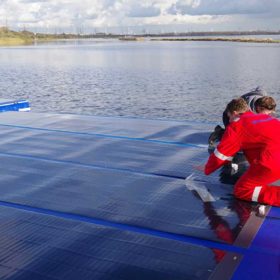
CIGS solar panels for offshore PV
A Dutch consortium is testing a 20 kW pilot floating PV installation for offshore applications with CIGS solar modules developed by Swedish manufacturer Midsummer. The panels consist of 144 solar cells and measure 4 m X 1 m, with up to 485 W of capacity.
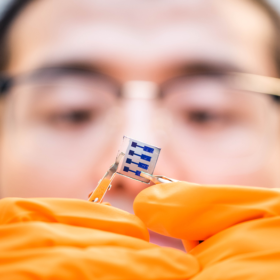
Green solvents for a 17%-efficient organic solar cell
Scientists in Sweden and China developed a solution-based process to produce organic solar cells, demonstrating efficiencies better than 17%. The process utilizes paraxylene as a solvent, which the researchers claim is less toxic and more stable than others used to reach high organic solar cell efficiencies, and with more work could be scaled up to produce large area devices.
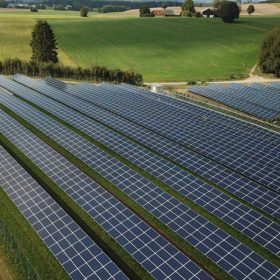
Germany’s tender for utility scale solar concludes with average price of €0.05/kWh
Around 512 MW of PV capacity was allocated by the German authorities in the procurement exercise.
Output verified: monitoring of the PV plant from the ground up
Suppliers are updating SCADA and monitoring platforms to provide new levels of data acquisition and analytics to provide PV project owners and operators with unparalleled insights into design, performance and O&M. Join this pv magazine Webinar, in partnership with TrinaTracker, to learn more about these developments with a leading PV solution provider. The webinar will see the global launch of the Trina Smart Cloud, including a demo of the platform drawing on real-world data from Trina-supplied projects in the field.

Germany deployed 4.42 GW of PV in first ten months of 2021
The country’s cumulative installed solar PV capacity has now reached 56.9 GW.
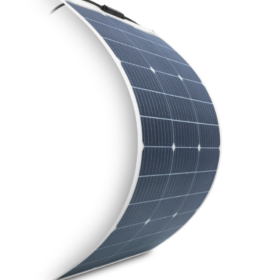
Flexible 200 W solar module for boats, caravans
Offered by German provider Green Akku, the module is only 2mm thick and has a weight of between 1.45 and 3.63kg, depending on size. It can can be bent up to 50 degrees.
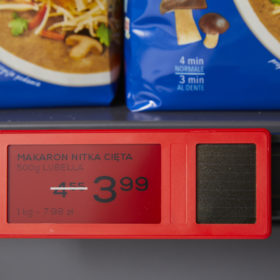
Perovskite solar cells for electronic shelf labels
The solar-powered electronic shelf labels are intended for use in retail stores. Users are enabled to change prices centrally and synchronously across all retail stores within a chain.
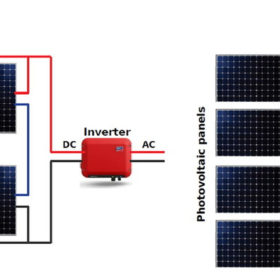
Micro-inverters vs. string/central inverters
A French research group has compared the performance ratio of 100 PV systems relying on micro-inverters with that of 100 installations relying on string/central inverters. It found the performance ratio is around 79% for both system typologies and that arrays with micro-inverters are more sensitive to environmental factors.

The Good, the Bad and the Ugly: defects in perovskite solar cells
Scientists in the UK delved deep into the structure of a perovskite solar cell, looking to understand the complex relationship between the materials that make up the perovskite layer, and the role of different defects in both limiting and improving performance. The findings could allow for new perovskite materials that are specially structured to maximize PV performance.
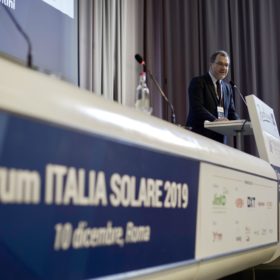
‘Italy needs own supply chain to navigate raw materials crisis’
Paolo Rocco Viscontini, president of trade association Italia Solare, has spoken to pv magazine about the challenge high system prices pose to Italian solar and discussed the nation’s ‘super bonus’ tax deduction, which remains the main market driver for small scale arrays.
