Heat pump control strategy for solar assisted district heating
Researchers in Spain have proposed two control strategies for the integration of heat pumps in district heating systems assisted by solar thermal collectors. Their technical-economic analysis shows that the proposed combination can reduce reliance on gas while also reducing costs.

The Hydrogen Stream: Green hydrogen for Italy’s Apennine railway, new plans from Ukraine, Estonia, Canada
Spanish energy giant Iberdrola will lead a consortium that plans to convert the Apennine railway axis in central Italy to green hydrogen. Ukrainian energy company NJSC Naftogaz has said it wants to produce green hydrogen with a German partner, and the Port of Tallinn, in Estonia, wants to become a hydrogen hub.
Sustainable solar supply chains: returning cell-to-module PV manufacturing to Europe
In this pv magazine Webinar, we will learn about Meyer Burger’s vision for Made-in-Europe PV and how the renaissance of a vertically integrated PV manufacturing ecosystem can create jobs and value across Europe. We will also look at advantages relevant for installers and consumers.
Public debate begins on France’s largest solar-plus-storage project
The 1 GW Horizeo project includes a solar plant, battery storage, a green hydrogen production unit, a data center, and an agrivoltaic facility. It is being planned near Saucats, a municipality in the Gironde department in Nouvelle-Aquitaine in southwestern France.
TÜV Rheinland confirms that Soltec’s algorithm increases PV plant yields by 5.3% on cloudy days
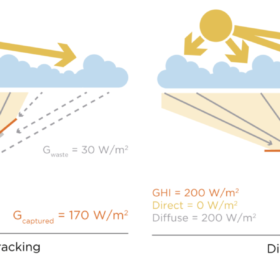
TÜV Rheinland has verified the performance of the Soltec Diffuse Booster algorithm, which uses both sensors and weather forecasts to drive its solar trackers. According to the manufacturer, it can increase the annual revenue of a 100 MW PV plant in Spain by €1.8 million.
Coupling PV-powered electrochemical water splitting with battery storage
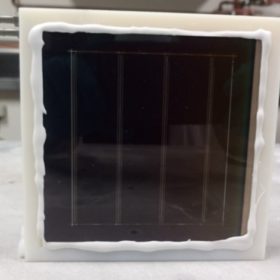
A German research team has developed a photovoltaic-electrochemical device for alkaline water electrolysis that can be linked to battery storage. The proposed system configuration can not only smoothen out the PV power fluctuations and facilitate power coupling, but also improve solar to hydrogen efficiency.

Scotland includes solar in commitments after Greens power-sharing agreement
Friday’s announcement of a new arrangement in the Scottish Parliament has led to the inclusion of Green policies in a document issued jointly with the SNP. Solar gets a mention, but stays very much in the shadow of wind power.

Conical roof equipped with solar tiles
The solar tiles were deployed on a conference center in Glücksburg, Germany. In addition to PV, the building also uses solar thermal energy and biomass to cover heat demand. The power generated by the PV array is utilized entirely for self-consumption.

Uzbekistan wants to tender another 900 MW of PV
The Uzbek Ministry of Energy plans to hold two more solar tenders for a series of PV plants spread across the Kashkadarya and Fergana, Bukhara, Khorezm, and Namangan regions. It also revealed that there are 1.29 GW worth of projects under construction in the country.

The world’s hottest heat pump
A Norwegian consortium has built an industrial heat pump that can reach a temperature of up to 180 degrees Celsius. The machine can be used with different industrial processes that rely on steam as an energy carrier and can reduce a facility’s energy consumption by between 40% and 70%, as it enables the recovery of low-temperature waste heat.
