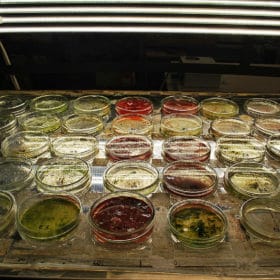
Ever heard of algovoltaics? Enel is testing it for applications on large solar plants
Nicola Rossi, head of innovation at Enel Green Power, has told pv magazine how the company is seeking to combine microalgae cultivation with solar power generation. The integration scheme is aimed at minimizing interferences with the PV plant and maximizing the benefits in microalgae yield

Ferrero signs up for Sicilian solar – the ambassador will be happy
The Ferrero Rocher maker will buy the energy generated by two agrivoltaics projects planned in Sicily as it aims to halve its greenhouse gas emissions by 2030.
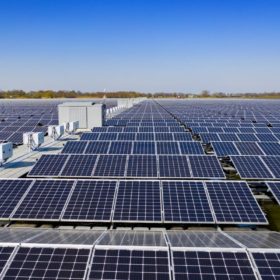
Construction begins on Europe’s largest floating PV plant
The plant is being built by Dutch developer Groenleven on a former sand extraction lake in the northern Netherlands. The company’s project manager for floating PV, Willem Biesheuvel, told pv magazine about its approach to deploying floating arrays always with a west-east orientation, which he claims ensures more stability and resistance to wind and waves.

CEA-Ines achieves 19.2% efficiency for flexible perovskite solar cell
The cell was fabricated with a flexible substrate made of indium tin oxide (ITO) and polyethylene terephthalate (PET). The device was tested through a damp heat test and showed it can retain around 90% of its initial efficiency after 800 hours.
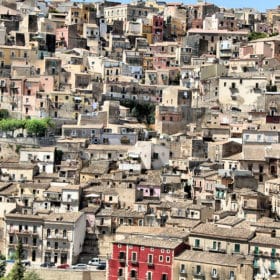
Axpo Italy chief says country is catching up with European private-PPA peers
Two PV farms planned in Sicily by Canadian Solar, with a total 12 MWp generation capacity, will sell the electricity they produce to Axpo Italia under a ten-year PPA at a fixed rate which the Chinese-Canadian company did not reveal.
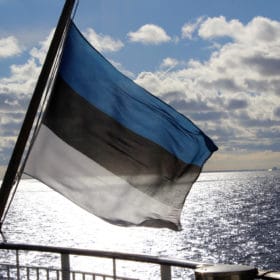
Estonian companies working on a green hydrogen value chain in 5 to 10 years
Estonia relies heavily on oil shale, which accounts for 4% of the country’s GDP. The Baltic state is working to increase green hydrogen production, but PV is projected to maintain a marginal role despite the recent growth. We spoke about it with Estonian energy company Alexela and cleantech start-up PowerUP Energy Technologies.
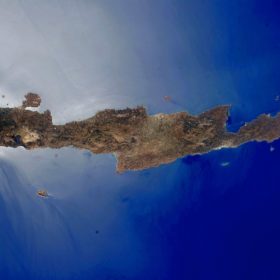
Greece developed 1 GW of solar in 2020 and has linked Crete to the mainland grid
Statistics published by Greece’s leading solar association show the country constructed 913 MW of new photovoltaic systems last year. Meanwhile, Greece’s largest island has been connected to the mainland power network by what has been described as the world’s longest subsea AC cable.
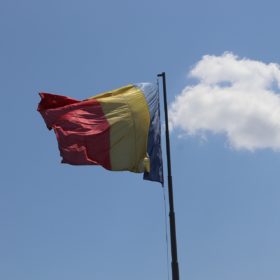
Romania preps auction scheme for large-scale solar, renewables
The scheme is expected to be issued within 18 months. According to law firm Schoenherr Romania, there is a growing appetite for large-scale solar projects in the country among investors.
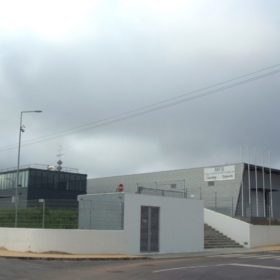
Solar module factory to resume production in Portugal
An investment of around €5 million will allow an old solar panel factory in the Beja district to reopen and create more than 40 new jobs. Galp Energia’s former director of innovation is part of the new team.

Next2Sun unveils bifacial photovoltaic fence
The solar fence has an output of 400 W per fence section. It is built with heterojunction or n-type PERT bifacial cells developed by the German start-up and relies on its vertical mounting technology for bifacial photovoltaic panels.
