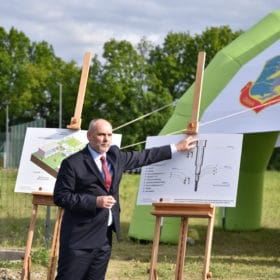
Photovoltaics, heat pumps to rescue failed geothermal project in Poland
The Polish government is supporting a hybrid renewable energy project based on a deep-borehole heat exchanger (DBHE) whose heat pumps are powered by photovoltaics. The heat generated by the facility will be used for district heating.
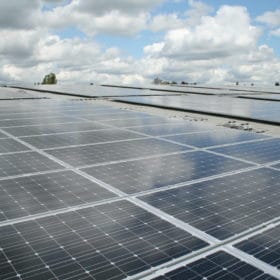
Transposition of new EU laws could increase scope of energy communities in Italy, says ENEA
Energy communities, recognized and supported in Italy’s National Recovery and Resilience Plan, could soon increase their role in the country’s energy transition, Italian research agency ENEA told pv magazine.

Romania sees first green bonds
World Bank arm the International Finance Corp has now extended almost €76 million of credit into two sustainable lending facilities launched via Raiffeisen Bank.
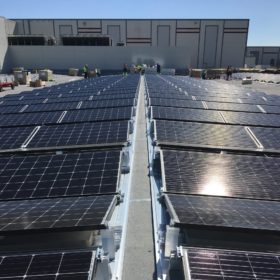
PV modules degrade less in Nordic climates
Norwegian researchers have used a year-on-year approach, considering the combined effect of temperature, humidity, and ultraviolet irradiation, to assess the degradation rate of polycrystalline modules with a temperature coefficient of -0.43%, mounted with an approximately 10-degree tilt, and located in eastern Norway. They found that these modules degrade in the range in the range of 0.1-0.19% per year, which is 0.4% less than panels operating in other climates.
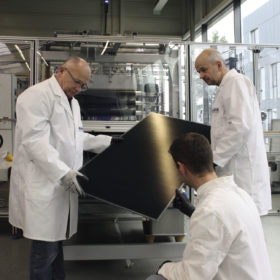
Chinese court upholds laminator patent
German manufacturer Robert Bürkle GmbH has obtained a first instance judgement preventing a rival company from producing equipment that infringes on its patents. The decision of the Intermediate Peoples Court in China is not yet final, and the rival company has already filed a complaint against the ruling.
Tennet begins internet-of-things grid balancing project
Household heat pumps, EV chargers and rooftop solar panels will be able to earn their owners benefits in return for helping to balance grid networks struggling to accommodate new solar and wind power generation.
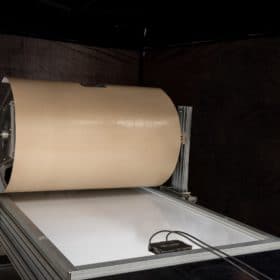
A repair tape for cracked backsheets
Backsheet failures have plagued the industry, causing hefty financial burdens to many asset owners. DuPont has launched a product it says allows for easy repair of modules.

Italy installed 152 MW of PV in Q1 2021
The country installed 35 MW more solar in the first three months of the year than it did in the same period a year earlier. Its cumulative capacity surpassed 22.1 GW by the end of March.

German hydrogen demand likely to pick up from 2030, says Fraunhofer
Widespread green hydrogen deployment will be key to achieving stringent climate targets, and German hydrogen demand is set to grow from the 80 TWh range in 2030 to between 400 TWh and 800 TWh by 2050, according to a new joint study by several Fraunhofer-related entities.
Analysis of Italy’s disappointing fifth renewables auction
“RES1 has not worked,” said operators commenting on Italy’s auction scheme for renewables. The lack of concrete projects to be submitted to the auctions is due to a combination of factors primarily based on “excessive bureaucracy,” and the impossibility of ground-mounted PV projects in agricultural areas to get incentives, they added. Nonetheless, things could soon change, especially if an RES2 scheme is implemented.
