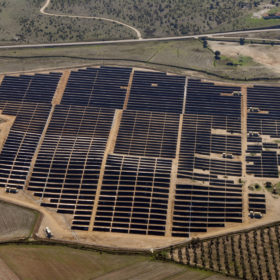
Solaria gets grid connection approval for 450 MW solar park in Spain
The project will be built near the Trillo substation, in the Castilla–La Mancha region and represents around 15% of the 3.3 GW solar project pipeline the company hopes to deploy in Iberia by the end of 2023.
US corporate clean energy procurement platform opens in Europe
LevelTen claims its online platform offers small companies the chance to band together to buy green energy and connects renewable energy producers and consumers in such an effective manner it has already driven $1 billion of green energy supply in its homeland.

Renewables and geopolitics: The United States
An accelerated transition to renewables could go either way, regarding the United States’ unique geopolitical strength. According to Indra Overland – head of the Center for Energy Research at the Norwegian Institute for International Affairs – the U.S. could surrender a major advantage if it abandons fossil fuel. The nation could, however, remain dominant in the global energy sector if it continues to lead on innovation and clean energy tech-related intellectual property.
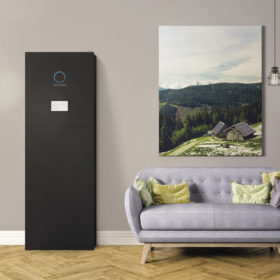
Italy has 80 MW/168 MWh of storage linked to renewables
According to figures from Italian renewables body ANIE Rinnovabili, 18,036 storage systems coupled to clean energy power generation have been installed in the country. Most of the batteries are in Lombardy, whose administration offers rebates.

Belt and Road to bring 1 GW of solar to Italy
Chinese state-owned PV manufacturer Jetion Solar says it has signed a deal with Italian government-owned oil and gas major Eni to develop a slew of new solar projects across five regions in the next three years in a deal worth €2 billion.
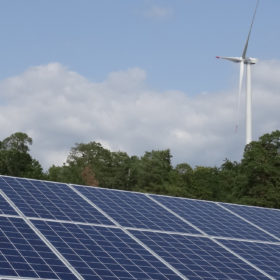
Forestalia plans additional 1.3 GW of solar in Spain
The Spanish company plans to develop 66 solar and wind parks that will add 3 GW of renewable energy generation capacity in 50 municipalities near Teruel, Aragon over the next four years. Some 34 facilities will be solar plants that will add 1.3 GW as part of an investment of more than €2.4 billion.
Danish researchers bring some color to rooftop PV
Scientists led by the Technical University of Denmark have begun a project to design solar cells that can be produced in different colors with minimal effect on performance, making them suitable for building-integrated and other applications with aesthetic considerations.
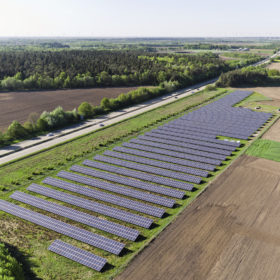
Germany added 2.72 GW of PV in eight months
In August alone, around 327 MW of new solar generation capacity was registered in the country. This month the FIT for solar systems up to 750 kW in size will fall another 1.4%.
Switzerland plans large scale solar auctions
The Swiss Federal Council intends to increase competition in the solar sector and set fixed tariffs for large PV projects using tenders. The electricity market will be fully opened up in a move industry association Swissolar says will discriminate against PV and threaten the rapid expansion of renewables.
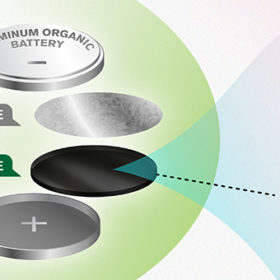
New aluminum batteries for renewables storage
The devices, developed by a European research team, are said to have twice the energy density of conventional aluminum devices. The scientists used a cathode made of anthraquinone, instead of one based on graphene, increasing energy density.
