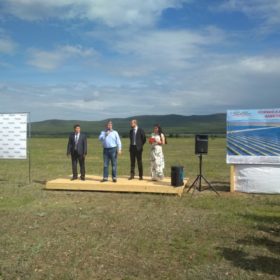
Hevel breaks ground on 15 MW solar plant in Siberia
With completion scheduled by November 2019, the Khorinskaya PV facility will be the second solar park to be built by the Russian solar module manufacturer in the Republic of Buryatia.
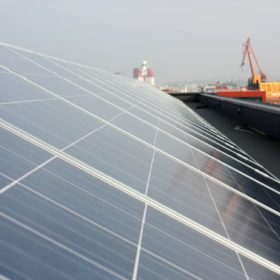
Power2U energy management platform launched in Sweden
InnoEnergy has launched its energy management platforms with local partners in Sweden. The platform would help integrate renewable energy resources through battery storage management algorithms. An expansion into other markets is planned already.

ABB finalizes $2.6bn GE Industrial Solutions acquisition, deploys VPP in Italy
The company reports that its IoT ABB Ability platform connects to existing GE Industrial Solutions’ installations. The company will supply its products to GE, with the GE brand name being retained. Access to the North-American market was named as one of the primary motivators for the acquisition. At the same time, the company inked a deal to support Be Power in the Italian market for dispatching services with its ABB Ability solution.

German scientists use chemical process to boost solar cell efficiency
A team of researchers from the University of Erlangen-Nuremberg in Germany has published research into a physical-chemical process known as singlet fission, which it says could boost solar efficiency by as much as 50%.
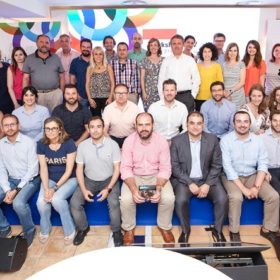
Spain: Enel builds 84.9 MW solar park, Barcelona launches own energy company
Spain’s Enel unit Endesa plans to invest €59 million in the construction of a 84.9 MW solar park in the town of Totana, in the southern region of Murcia. In other news, Catalonia is also seeking independence through energy. In this vein, Barcelona Energy, a public metropolitan electricity operator that will supply renewable electricity to the City Council and other municipal companies, as well as street lighting, began operations yesterday.
Solar set to cross 1 GW milestone in Ukraine
According to new provisional numbers released by the Ukrainian government, around 206 MW of new solar PV power stations were connected to the country’s grid in the first half of 2018. Cumulative installed PV power has now reached 948 MW.
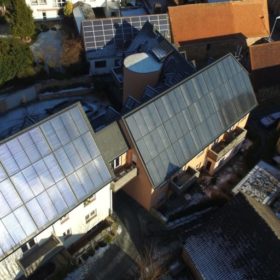
Germany registers almost 200 MW of solar in May
In particular, the rooftop PV segment continues to drive the market in Germany. For ground-mounted systems, newly registered PV capacity for May was approximately 37.5 MW.
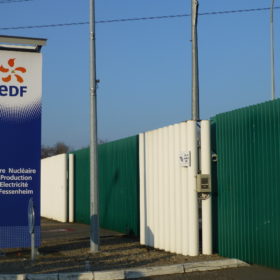
France unveils details of 300 MW solar tender for Fessenheim nuclear site
Through the tender, the French government intends to allocate 200 MW for ground-mounted PV plants up to 30 MW, and 100 MW for rooftop solar systems up to 8 MW. Projects financed through crowdfunding will be granted the €3/MWh bonus, which is also included in all of the national tenders.
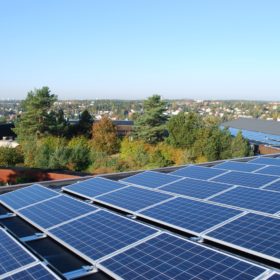
Sweden increases 2018 solar budget, again
The annual budget for solar rebates has been raised from SEK 390 million to SEK 915 million (US$102.5 million). Additional funds are intended to spur more growth and reduce waiting period for applicants.
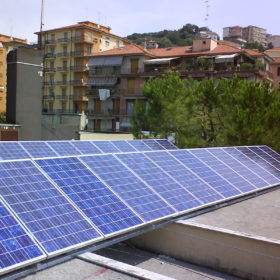
EU: No charges for PV self-consumption up to 30kW
EU member states have reached a consensus regarding the prohibition of discriminatory taxes for self-produced energy, in negotiations on the renewable energy directive. The indiscriminate regulation covers systems of up to 30 kW capacity. Furthermore, double taxation through the additional charges on energy storage is to be avoided.
