Shell and Total join fossil fuel companies bidding for a piece of Europe’s PV renaissance
With Europe set to return to solar power levels last seen during the PV boom seven years ago, a wave of mergers and acquisitions is taking place as the oil and gas majors splash the cash to buy the expertise needed to participate in PV’s new dawn.

Schneider Electric pulls out of utility-scale PV business
The French power electronics specialist is pulling out of the utility-scale segment to strengthen its profile in the residential and C&I space.
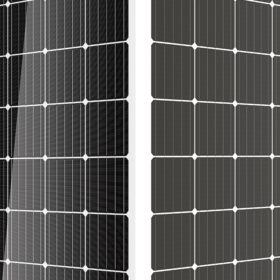
Trina to ship 16 MW of its bifacial panels for French projects
The Chinese manufacturer will supply EDF with around 45,000 bifacial, double glass Duomax Twin panels. The French utility will use the modules for two large-scale projects selected through tenders held by energy regulator CRE.
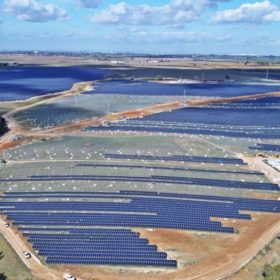
European PV market grew 36% to reach 11 GW in 2018
Solarpower Europe has released its estimates for Europe’s installation figures in 2018. A reduction in system prices and a policy push boosted solar across the continent. And if the trade association’s CEO is to be believed, the newfound growth has just begun.

Lyon’s BePositive event shows confidence in French PV market remains strong
The solar event in Lyon illustrated how expectations of French solar remain big despite lower-than-expected development and issues related to regulations and carbon footprint requirements. The large participation of international and Chinese players seeking business among installers and distributors is a signal things may improve in the short term, and larger volumes may be deployed in the coming years.
EDF negotiates Luxel acquisition to boost its French solar deployment
France is set to have a near-3 GW annual solar market for the next six years from tenders alone and energy giant EDF wants a 30% piece of the action. To do so, the utility has entered negotiations with Luxel shareholders to acquire the PV developer.
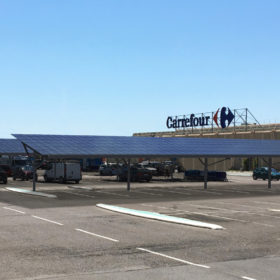
Carrefour deploys solar on 36 superstores in France
The French retailer will use energy generated by the PV installations exclusively for self-consumption. The projects will be developed by French developer Urbasolar.
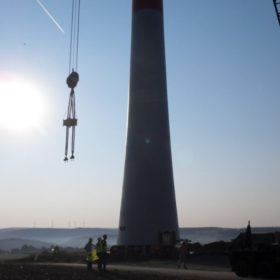
Europe passes 500 TWh of renewables demand – but solar loses ground
The 2018 figures for the Guarantee of Origin (GO) certificate market show a marked growth in clean energy demand in Europe. Demand surpassed 500 TWh, while GO prices reached record levels. Solar GO, however, saw a slight fall.

US leads as the volume of corporate clean energy bought smashes record
Companies in the United States accounted for more than 60% of the clean energy deals signed by corporations worldwide last year, according to BloombergNEF. A proposed renewable portfolio standard for Chinese business, though, could turn the picture upside down in a year’s time.
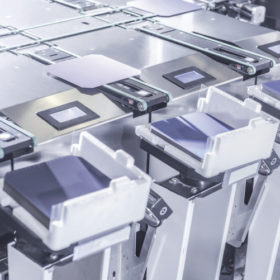
French researchers produce 348 W half-cell HJT module
Scientists at France’s Alternative Energies and Atomic Energy Commission, working with Swiss equipment supplier Meyer Burger, have hit 23.9% efficiency in large-scale production of heterojunction cells. The team also combined HJT cells with other technologies to produce a module with a 348 W power rating.
