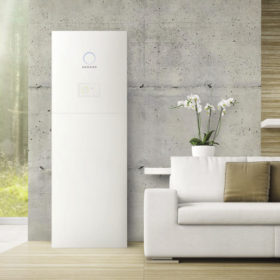
Sonnen battery still running after 28,000 full charge cycles
Sonnen has published test results indicating the longevity of its storage systems after extended use.

Germany’s first tender for rooftop PV concludes with average price of €0.0688/kWh
The procurement exercise’s final prices ranged between €0.0535 and €0.0789 per kWh. Furthermore, the German authorities revealed that the tender for ground-mounted PV concluded with an average price of €0.05 per kWh.

The Hydrogen Stream: Plans for $75bn, 50 GW green energy hub in Western Australia
Plus, as the European Commission prepares to present its ‘Fit for 55’ climate change package tomorrow, European companies are continuing to develop hydrogen plans, including Shell in Norway and Siemens in Germany.
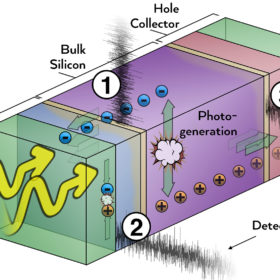
Bringing the noise for better solar cell efficiency
An international team of scientists developed a technique to isolate individual sources of electrical ‘noise’ within a solar cell. Comparing the technique to being able to pick out a single voice within a 200-person choir, they say the technique will help to improve understanding of where efficiency losses occur within a cell, and effective ways to mitigate them.
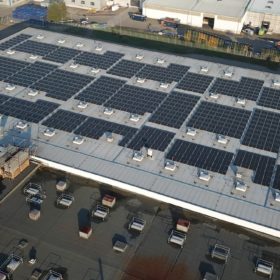
SMA, Renusol link planning tools
The German companies plan to combine their tools for project planning and battery systems via a new interface. They aim to simplify the work processes of planners and installers.
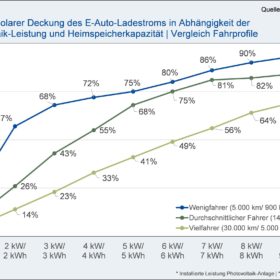
Solar+storage could provide 80% of annual EV power needs
A new EUPD Research report shows that a PV system can cover 39% of the power demand of an electric vehicle, but this potentially rises to 80% if storage is included.
Tesvolt invests in development of cable-free EV supercharging
The German energy storage business has invested an unspecified amount in compatriot Stercom Power Solutions, which offers the ability to transfer electricity, untethered, from a magnetic coil to a receiver coil on the underside of new-energy vehicles.
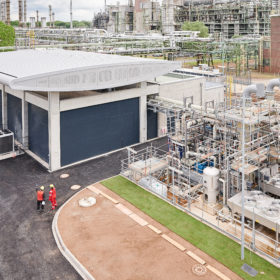
The Hydrogen Stream: Ineos to invest £25m in HydrogenOne fund as Shell fires up its 10 MW electrolyzer
Plus, the Norwegian government is set to devote €2.5 million into a joint venture trying to develop liquid organic hydrogen carrier solutions for shipping by the middle of the decade.
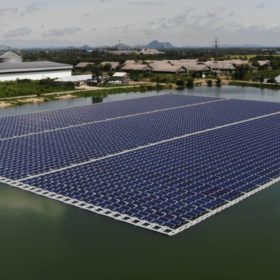
German government study to evaluate potential of floating solar on lakes at former mines
Around 500 open-pit lakes left behind as a legacy of Germany’s open-cast lignite mining industry could potentially host more than 50 GW of solar generation capacity. With that in mind, the Federal Ministry for Economic Affairs and Energy is financing a three-year study into the technology’s revenue potential.
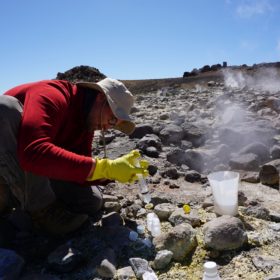
New approach promises reduced impacts in lithium mining
Research institutes in Germany and Chile are investigating the potential of extracting lithium and other minerals, as well as drinking water, from brines used in geothermal energy. The concept could greatly reduce the environmental impacts of mining in northern Chile. The project has set up a demonstration of the technology at a geothermal power plant in western Germany, and is working to identify optimal sites in Chile for further development.
