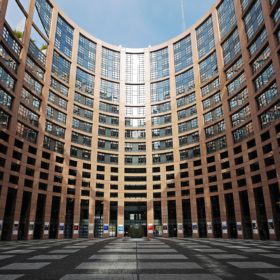
Europe’s 2050 carbon neutrality plans back on the agenda
Reports about a leaked document suggest that Germany, Italy, Greece and Slovakia have joined a group of EU member states that support a carbon neutrality bill. Germany refused to support such plans in March, but with political support for the German Green Party skyrocketing, Chancellor Angela Merkel is likely to revise her government’s position. With Germany now on the ticket, a plan could be finalized at some point this year.
EDF to acquire Energy2market
German power distributor Energy2market intends to develop its international activity under its new French owner. The founding shareholders and Trailstone UK will sell their stock to EDF subsidiary Pulse Croissance.
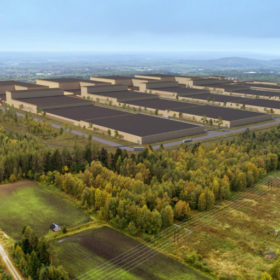
Northvolt secures $1bn for battery gigafactory in Sweden
Initially, the company will construct a 16 GWh factory plus a joint venture fab with Volkswagen in Germany, which will also have a throughput of 16 GWh. Both factories could be extended to tap further into the large market for battery cells in Europe.
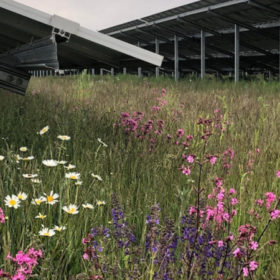
Why solar parks should replace agricultural land
This year’s Earth Overshoot Day falls on Friday, August 2. The current UN report on biodiversity protection does not report anything good. At least two reasons for our children to demonstrate on Fridays so that we not only talk, but act, says Ralf Schnitzler, project developer, solar parks, Bejulo GmbH. He believes that now is the time to take the energy revolution seriously. Below, he lays out his arguments and ideas on how the energy transition and other transformations could be possible with solar parks.
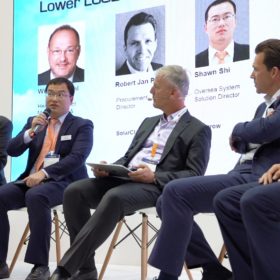
Video: Longi launched the HiMo4 mono-PERC series at Intersolar Europe
Winfried Wahl, head of product management at Longi Solar spoke to pv magazine about how the HiMo4 has a 15% higher power output than the previous iteration in the series.
Reatile buys 20% stake in Juwi’s South African unit
The buyer has not disclosed how much it invested in the subsidiary of German EPC contractor Juwi, which is building four PV power plants with 250 MW of total generation capacity under the nation’s Renewable Energy Independent Power Producer Program.
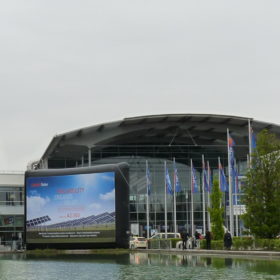
Three arrests at Intersolar Europe for circumventing EU’s minimum module price
German customs officers executed two arrest warrants during the Smarter E show in Munich. The public prosecutor’s office in Nuremberg-Fürth also confirmed another arrest, connected to an existing investigation of a Chinese PV manufacturer. The arrested executives were allegedly involved in commercial smuggling of solar modules, the customs authorities and prosecutor told pv magazine. The authorities believe minimum import prices for crystalline solar modules from China, in effect until September, were circumvented and millions of euros in payments were evaded.
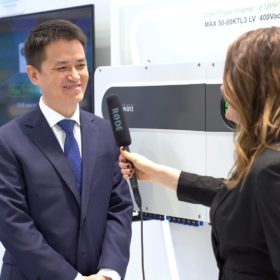
Video interview with Growatt co-founder Qiao: ‘We expect 500 MW shipments in Europe alone’
That goal could easily be achieved judging by the company’s first-quarter results, Qiao said during an interview with pv magazine at Intersolar Europe. He also pronounced himself happy with Growatt’s performance in TÜV testing and with progress in the hybrid inverter segment.
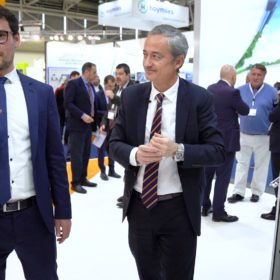
Video: Gamesa Electric’s central inverter keeps it cool in heat and dust
At Intersolar Europe, Gamesa Electric’s solar sales director, Enrique de la Cruz explained the key to ensuring high reliability and a low energy price with the company’s new central inverter offering.
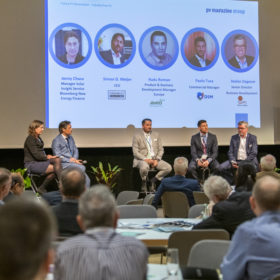
Video: Future PV Roundtable looks into subsidy free PV
At the Smarter E Europe, held in Munich this month, pv magazine hosted another Future PV Roundtable to discuss the possibilities of subsidy free solar projects. In all market segments solutions are at hand and representatives across the industry shared their insights with us.
