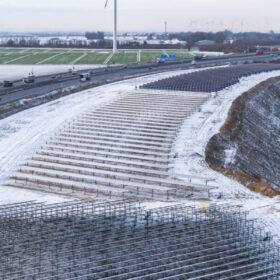
RWE testing agrivoltaics on former opencast mine
The power utility said it is testing three different agrivoltaic concepts at the Garzweiler opencast mine in western Germany.
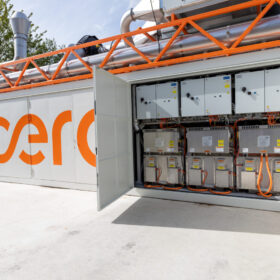
The Hydrogen Stream: Ceres secures license agreement for SOEC stack production
As electrolysis is gaining traction in the markets, European and US companies announce new hydrogen projects in the heavy mobility sector. Meanwhile, UK-based solid oxide electrolysis cell (SOEC) tech developer Ceres Power signed a global long-term agreement with Delta Electronics.
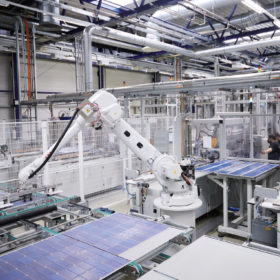
Meyer Burger to cease PV module production in Germany
Meyer Burger, a Switzerland-based heterojunction cell and panel manufacturer, says it will stop making PV modules in Germany, but it will continue to produce solar cells in the country to support its panel production operations in the United States.
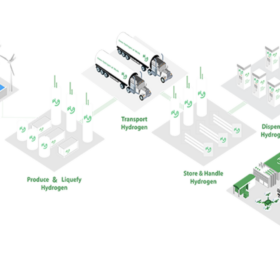
The Hydrogen Stream: Plug Power commissions 1 MW PEM electrolyzer
A number of hydrogen projects are moving forward in the United States, Germany and Denmark. In other developments, the German state of Saxony is teaming up with other partners, including the Czech Republic, to set up a hydrogen network in Eastern Europe.
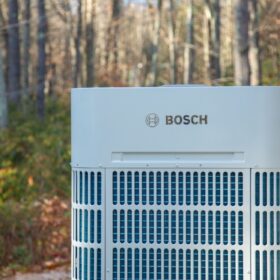
Bosch unveils cold climate heat pump for residential applications
According to the manufacturer, the new Inverter Ducted Split (IDS) Ultra heat pump can provide 100% heating capacity at an outdoor temperature of -15 C and can operate down to – 25 C.
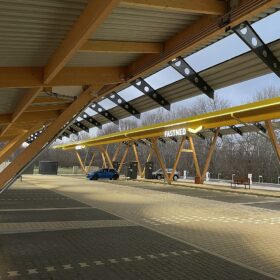
German companies unite to bring virtual power plants to mid-sized businesses
Germany’s Electrofleet has invested in its virtual power plant technology partner Dieenergiekoppler. The two collaborate to enable mid-sized businesses to use self-produced renewable energy based on fixed price contracts. Dieenergiekoppler’s latest financing round solidified the collaboration.
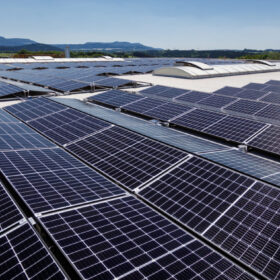
Many buildings in Germany unsuitable for rooftop PV, says TÜV Süd
TÜV Süd has discovered that 8% of the rooftops it examined in Germany last year are not suitable for PV deployment.
The Hydrogen Stream: IEA says just 7% of planned capacity to go online by 2030
The International Energy Agency (IEA) says in a new report that only 7% of planned renewable-based hydrogen capacity is expected to go online by 2030. The report notes the need for consistent policies to support demand and prevent stranded assets.
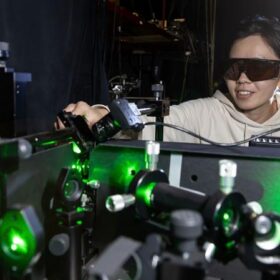
‘Shallow defects’ key to high efficiency of perovskite solar cells, say researchers
Researchers at the Jülich Research Center in Germany have used novel photoluminescence measurements to analyze the recombination of charge carriers in perovskite solar cells. They have found that the loss of charge carriers in perovskite devices works differently from other types of PV cells.
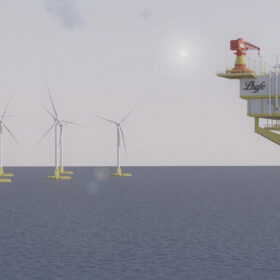
Weekend Read: Agreeing on green hydrogen
In November 2022, Germany’s Energie Baden Württemberg and steelmaker Salzgitter Group signed one of Europe’s first power purchase agreements (PPAs) for hydrogen production. More have followed and with the European Union introducing rules to govern green hydrogen, an industry is planning for its future.
