
Ghana plans to procure 200 MW of battery storage
Ghana’s Minister for Energy and Green Transition says the country will advertise competitive bidding processes to deploy 200 MW of battery storage across the country. Ghana’s current installed battery capacity stands at 10 MWh.
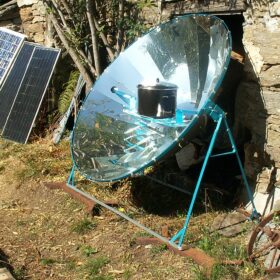
Efficient solar PV cooking with sand-based thermal energy storage
Scientists in Ghana have developed a device that combines a conventional solar PV-powered steam cooker with sand-based thermal energy storage. The system can achieve a thermal efficiency of 38.9% and has a payback period of 4.5 years.
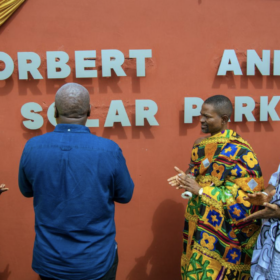
Ghana starts working on nation’s largest solar project
Ghana has begun building the 200 MW Norbert Anku solar park, its largest renewable investment to date, with plans to expand the project to 1 GW by 2032.
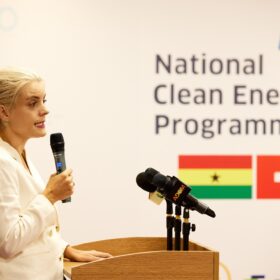
Ghana, Switzerland partner on $200 million rooftop solar rollout
Ghana’s new clean energy program, backed by Switzerland’s Klik Foundation, will install 4,000 rooftop systems totaling 137 MW to expand renewable capacity and cut emissions.

Ghana starts building solar for irrigation scheme
Construction is underway of a 1 MW solar project that will power agricultural production in the Greater Accra Region of Ghana. The site forms part of a Korean government-funded program addressing the twin challenges of energy transition and food security in the region.
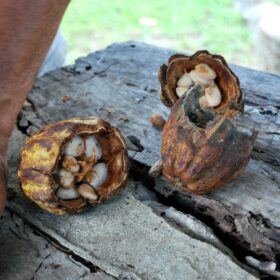
Photovoltaics for cocoa pod splitting
Scientists have designed a cocoa pod splitting device that runs on five monocrystalline PV panels. They have simulated its operation and have found it can achieve a splitting efficiency of 98.92%.
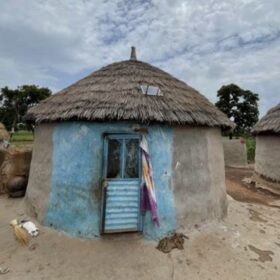
Tiny solar-plus-battery kits yield annual savings exceeding hardware cost
Researchers found multiple benefits after distributing free solar panels and battery systems with USB ports to 800 rural households in Ghana.
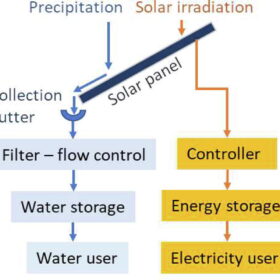
How to combine photovoltaics with rainwater harvesting
Scientists have developed a system that harvests rainwater running off PV panels for household use or hydrogen production. Their analysis showed that, in the southern Sahel, the system can meet both the energy and water requirements for electrolysis, with surplus rainwater covering up to 50% of a household’s daily water demand.

Ghana plans renewable energy investment fund
Ghana plans to accelerate its deployment of renewable energy sources, including solar systems for hospitals, public institutions and smaller companies, through a new green investment fund.
What’s cooking in PV?
Scientists have conducted an analysis of 20 years of academic publications about PV-powered electric cooking and have found interest in the field peaked in 2021-2022 in both developing and developed countries. They have also outlined some potential future developments.
