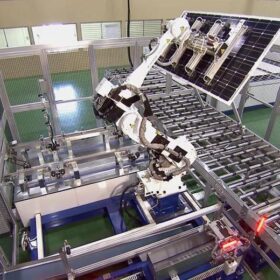
Japan’s NPC Incorporated expands PV production equipment capacity
Tokyo-based PV equipment manufacturing company NPC Incorporated will foster future capacity expansion due to equipment demand from an undisclosed North American solar manufacturer.
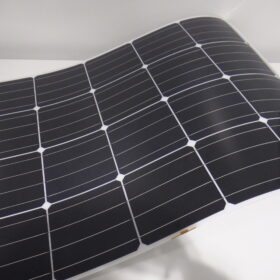
Japanese scientists design flexible crystalline silicon solar modules with PET front cover
The new solar panels have flexible properties and are suitable for roofs with loading restrictions. According to their creators, the modules showed high reliability under both high temperature and high humidity conditions.
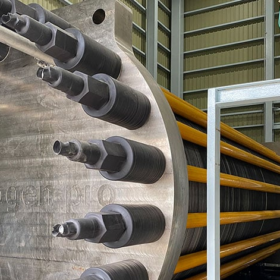
Mitsubishi testing 5.5 MW pressurized alkaline electrolyzers in Japan, Norway
Mitsubishi has conducted short-term validation tests of its 5.5 MW pressurized alkaline electrolyzers in Norway and long-term validation tests in Japan. It plans to incorporate the design of these two single-stack pressurized alkaline electrolyzers into a US project.
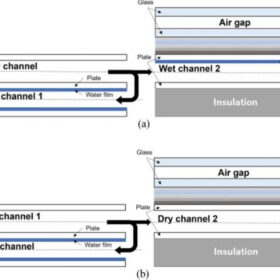
Reducing solar module temperature via dew-point evaporative cooling
Japanese scientists have designed a cooling system that reduces the solar panel operating temperature at the air inlet of the module. It consists of a dew-point evaporative cooler that supplies the near-saturation air to wet air channels that are attached to the back of a PV panel.
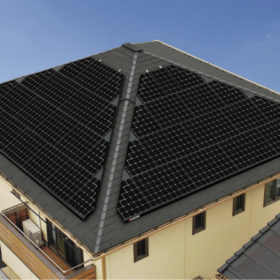
Kyocera enters solar generation business
Kyocera has moved into the PV generation business by announcing plans to procure surplus solar from owners of rooftop PV systems in Japan, so it can provide it to businesses through power purchase agreements (PPAs).
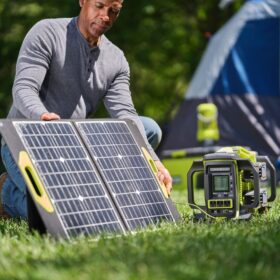
Ryobi introduces foldable 60 W solar panel for mobile tool charging
The lightweight panel can charge small devices or batteries in the company’s portable power station.
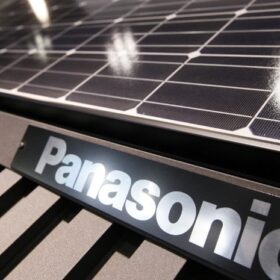
Panasonic introduces half-cut HJT residential solar modules
Panasonic unveiled its new residential solar modules – including half-cut heterojunction (HJT) models, along with a home battery system and energy management device – at the recent RE+ trade show in Las Vegas.
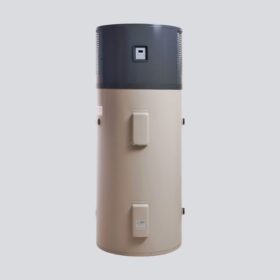
Rinnai launches hot water heat pump for residential applications
The new heat pump can purportedly provide hot water at a temperature of up to 70 C. It is specifically designed for climatic conditions with temperatures ranging from -10 C to 42 C, as well as coastal locations.

The Hydrogen Stream: Liquid hydrogen test flight could enable long-distance flights
H2FLY claims that a recent three-hour test flight, entirely powered by liquid hydrogen, could lead to sustainable long-range flights fueled by liquefied, cryogenic hydrogen. Solaris, meanwhile, has started selling hydrogen buses in Italy.
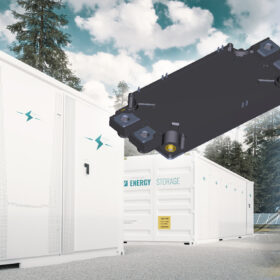
Toshiba unveils silicon carbide MOSFET for PV inverters
Toshiba has developed a 2,200 V silicon carbide (SiC) MOSFET for inverters and energy storage systems, in order to help inverter manufacturers to reduce the size and weight of their products.
