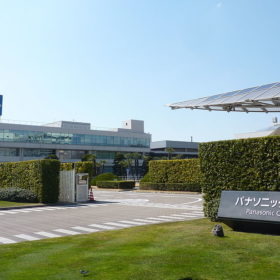
Panasonic and Toyota launch EV battery business as solar lifts Kyocera and LG
Electronics corporations Panasonic, Kyocera and LG have filed results for the nine months to December 31. All three reported uplifts because of their solar activity and LG has said it will dive deeper into energy storage. Panasonic is deepening its commitment to automotive batteries through a new joint venture with Toyota.

Japan’s fifth solar auction delivers final lowest price of $0.10/kWh
Only 39.8 MW of PV projects were allocated in the fifth round of Japan’s procurement program for large-scale solar. The lowest price offered was ¥10.99/kWh ($0.10) and the highest ¥13.0, for an average price of ¥12.57.
Germany tops global league table for renewable energy
A list compiled by a British price comparison website draws upon data from German company Statista which shows clean energy – including hydro – made up 12.74% of the nation’s power mix at the end of September.

Panasonic claims 16.09% efficiency for lightweight perovskite solar module
The device has an area of 802cm² and thickness of 2mm. The manufacturer claims it improved module performance through an inkjet coating method and a reduction in weight by using thin glass substrates.
Mysterious new chlorophyll with potential PV applications
Japanese researchers are studying the ‘Chl f’ substance which features a pigment in photosynthesis which can absorb far-red light from the lower end of the spectrum.
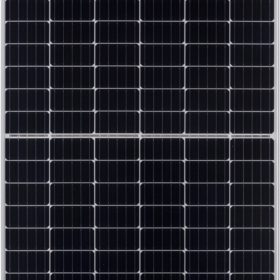
Half-cut modules from Sharp
The Japanese electronics giant has unveiled three monocrystalline half-cut cell modules said to provide 2-3% better performance than standard, full cell panels. The claimed efficiency of the modules exceeds 19.5% and Sharp says power output ranges from 330-395 W.
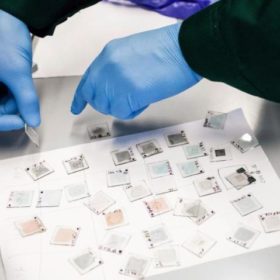
Japanese manufacturer acquires rights to produce 23.26% efficient CIGS perovskite cell developed by HZB and Kaunas University
The research group that developed the cell said the two materials used to produce it, dubbed 2PACz and MeO-2PACz, will soon be commercially available. The material consists of 1-2nm of self-assembled monolayers deposited on the surface of the perovskite by dipping it into a diluted solution.
Suzuki-led JV to invest $517m in second phase of Indian lithium-ion factory
A joint venture with Japanese peers Toshiba and Denso will make the investment in the Gujarat plant over the 2021-25 period, having pumped $174 million into the first phase of development.
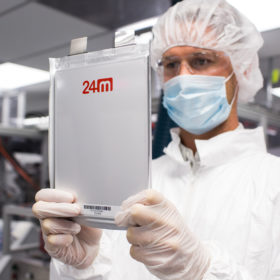
Kyocera to launch world first SemiSolid lithium-ion battery
The Japanese electronics giant is offering a new cell architecture developed by battery start-up 24M, in the U.S., which significantly improves battery economics. Kyocera will be the first company to bring the technology to market.
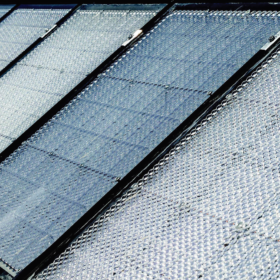
The year in solar, part III: Battery breakthroughs, inverter trouble, sustainable role models and new tech
Storage has long been expected to be the handmaiden of a renewable energy world and its long awaited advances started to finally emerge in the third quarter as researchers posited R&D achievements ranging from potentially potent tungsten disulfide nanotubes to the business case for 10-year solar panels.
