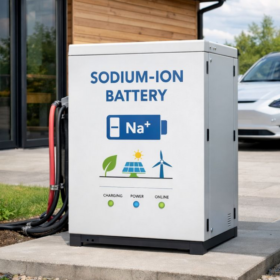
NanoMalaysia unveils sodium-ion prototype surpassing 300 Wh/kg
The new prototype ranks among the most advanced sodium‑ion battery systems reported worldwide.
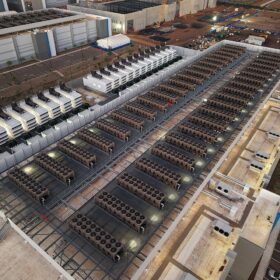
The limits to growth: The Malaysian way of navigating the data centre boom
Malaysia’s rising power demand, driven by industrial growth and data centers, is exposing grid and capacity constraints, prompting policies like Corporate Renewable Energy Supply Scheme (CRESS) to enable corporate renewable procurement while maintaining system cost recovery. A key factor is the System Access Charge (SAC), whose uncertain future trajectory affects long-term solar PPAs and investment decisions, making scenario-based modelling crucial for assessing project bankability.

Malaysia restricts non-AI data centers, citing energy concerns
Malaysia’s prime minister Anwar Ibrahim said future policy will ensure domestic consumers and the electricity grid are protected amid the country’s data center expansion. This could include leveraging the ASEAN Power Grid project to cover any supply shortfalls.
Malaysia launches new net metering scheme for rooftop PV
Effective since January 1, 2026, the Solar Accelerated Transition Action Programme (Solar ATAP) aims to build on Malaysia’s previous net metering program’s efforts to maximize the use of rooftops for solar generation by incentivizing consumers to export excess generation to the grid. The capacity limit has been set at 100% of the consumer’s maximum demand, or 1 MW.

Researchers propose new taxonomy for agrivoltaics
A Malaysian research team proposed new concepts such as cowvoltaics, sheepvoltaics, goatvoltaics, veggievoltaics, fruitvoltaics and fishvoltaics to better define the diverse applications of photovoltaics in dual land use. Their review outlines four main categories – livestockvoltaics, crop-based agrivoltaics, aquavoltaics, and zoovoltaics – and presents several business cases.
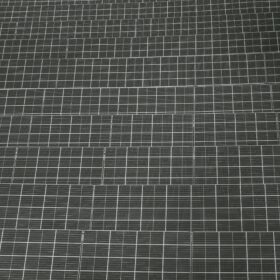
Masdar signs PPA for 200 MW floating solar project in Malaysia
Abu Dhabi-based Masdar has signed a power purchase agreement (PPA) for a 200 MW floating solar project in Malaysia, marking its first project in the country under the fifth large-scale solar program.

Singapore approves 1 GW hydropower import project from Malaysia
Singapore has conditionally approved a 1 GW hydropower import project from Malaysia’s Sarawak state, with first deliveries expected around 2035.

IEA says cost of capital for solar remains high in Southeast Asia
The International Energy Agency (IEA) says the cost of capital for solar remains higher in Southeast Asian countries than it does in other emerging and developing economies.

Over 6 GW of solar approved under Malaysia’s large-scale solar program
Malaysia’s large-scale solar scheme (LSS) has approved 6,028 MW of solar capacity to 117 companies across six bidding rounds to date, according to the country’s Ministry of Energy Transition and Water Transformation.
Solar and wind integration crucial as Southeast Asia electricity demand grows
The International Energy Agency’s latest report says solar and wind energy are well placed to meet Southeast Asia’s growing electricity demand. It adds that while additional deployment will create flexibility challenges, most countries in the region can integrate more solar and wind energy without requiring major system changes.
