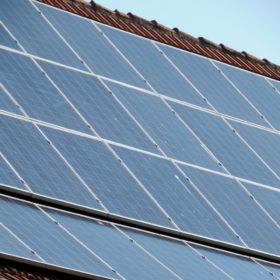
Net-metered rooftop PV on the rise in Malaysia
Sustainable Energy Development Authority figures show the country saw around 94 MW of new rooftop generation capacity added in the first 11 months of last year. That compares to less than 14 MW in the previous three years.
Solar glass factory approved by Malaysian government
The $483 million fab will be built by an unnamed ‘multinational glass manufacturer’ at the Kota Kinabalu Industrial Park, in the Sabah region.

Reducing total harmonic distortion with adaptive filters
A Malaysian study has compared the techniques used to reduce total harmonic distortion caused by PV systems. The paper, which considers the benefits and drawbacks of the approaches studied, suggests the use of adaptive filters.
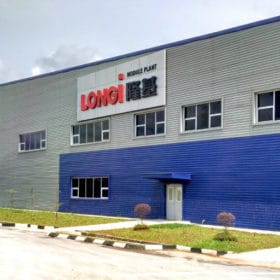
Another day, another $483m – of Longi production capacity plans
The Shaanxi-based solar manufacturer has made its 14th announcement this year of an intent to expand its ingot, wafer, cell and module output. Thus far – and we’re still three weeks short of year-end – the bill for the 112 GW of extra production spelled out in 2019 comes to a near $4.2 billion.

Ambitious 1 GW agrivoltaic livestock farming project announced in Malaysia
The Malaysia Automotive, Robotics and IoT Institute is planning a huge solar power project which will integrate agriculture and livestock farming in the Sabah region. The research institute claims to have already secured $50 million for the project’s first, 200 MW phase. The 25,000ha required for the projects will host up to 150,000 cattle as well as cultivation of forage crops such as kenaf, corn, wheat and hay.

Emerging markets help new faces into list of world’s top EPC providers
Although the Wiki-solar website ranking only gives a snapshot of PV project engineering, procurement and construction contracts outside China, it is nevertheless a useful indicator of the changing shape of the global solar market.

50 MW solar park comes online in Malaysia
The Kuala Ketil Solar Farm is in the state of Kedah, northwest Malaysia. Built by Chinese state-owned Edra Power, the plant also hosts agricultural activity.
Latest Malaysian tender attracts bids for 6.7 GW of capacity
The third round of the nation’s Large Scale Solar procurement program was oversubscribed more than 13 times its 500 MW limit. The final electricity price is likely to beat the previous $0.079-0.13/kWh to settle somewhere around $0.042-0.057.
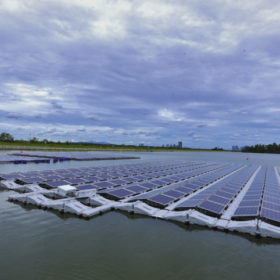
New alliance to expand floating PV in Southeast Asia
Pestech, a Malaysia-based electrical power technology company, has entered into a partnership with Chinese inverter maker Sungrow to jointly develop new floating solar solutions.
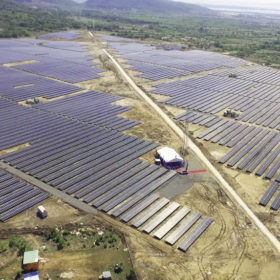
India’s renewable power generation cost the lowest in Asia Pacific
The cost of solar power generation in India has fallen to half the level seen in many other markets in the region due to extensive solar resource, market scale and competition.
