
Malaysia upgrades net metering scheme for rooftop PV
The Malaysian authorities say that approximately 1.7 GW of PV systems are operating under the Malaysian Building Integrated Photovoltaic (MBIPV) scheme and the country’s three Net Energy Metering (NEM) programs.
New method for PV site suitability mapping
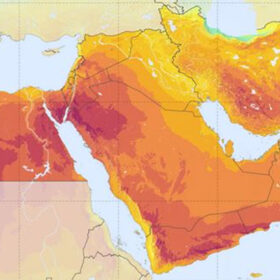
Scientists in Malaysia have developed a novel deep-learning method for PV suitability mapping. Applying the new approach to the Middle East, they found that approximately 5.8% of the region has very high suitability and 11.5% is highly suitable for PV energy development.

Malaysia introduces rooftop solar aggregation scheme
Malaysia’s first rooftop aggregation initiative for solar systems is now live. The program allows homeowners to lease or rent their rooftop for solar generation, with the electricity produced sold to commercial and domestic customers within a 5 km radius.

U.S. Commerce Department slaps unexpectedly high tariffs on solar imports
Coalition trade lawyer says the U.S. Department of Commerce’s final tariffs on solar cells and modules from Cambodia, Malaysia, Thailand and Vietnam are among the highest rates he’s ever seen.

Testing floating PV at different heights
Scientists have tested the performance of floating PV panels at a height of 800 mm and 250 mm above their floating structures. Their thermal and electrical performance was compared to that of a reference land-based system and the highest panel was found to show the greatest cooling effect.

Malaysia opens bidding for 2 GW of large-scale solar
Malaysia’s Energy Commission has launched an open tender seeking 2 GW of large-scale solar projects, with capacities ranging from 10 MW to 500 MW, to support the nation’s clean energy transition.
Novel MPPT tech based on salp swarm, hill climbing algorithms
Researchers have suggested to use a hybrid version of the so-called salp swarm algorithm (SSA) algorithm for maximum power point tracking in PV systems operating under highly fluctuating environmental conditions. The novel method also integrates the hill climbing algorithm, which simulates the process of climbing a mountain and reportedly helps find the best possible solution to a given problem.

Malaysia’s OCK Group invests $79.1 million in solar portfolio
OCK Group, a telecom services provider, says that it plans to invest MYR 350 million ($79.1 million) in a 116 MW solar facility.
Panasonic’s largest solar array installed in Malaysia
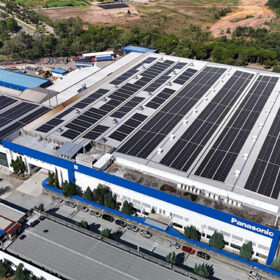
Panasonic has installed a 5.2 MW solar array at the facilities of one of its subsidiaries, Panasonic Appliances Air-Conditioning Malaysia Sdn. Bhd (Papamy). The system is the largest within the Panasonic group.
Malaysian developer to construct 100 MW of solar
Malaysian solar specialist Founder Group Ltd. has secured a conditional letter of award to build 100 MW of solar in Malaysia. It says the energy will help to power an AI data center.
