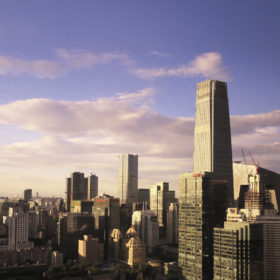
China holds key to corporate solar take-up but lags way behind Texas at present
The Lone Star State accounted for almost half of the activity witnessed in the world’s biggest corporate clean energy marketplace but analysts are excited about the prospect of Beijing mandating companies to purchase minimum levels of green electricity.

Agrivoltaics good for agriculture and panel efficiency
A U.S. research team has found the most efficient locations for agrivoltaics include western America, southern Africa and the Middle East. The researchers found crop land, grasslands and wetlands were the best environments for PV projects linked to agriculture. Conditions suitable for crops are ideal for improving solar module efficiency.
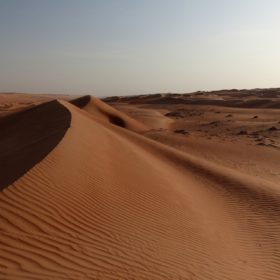
Oman launches tender for 146 MW of solar-diesel-storage projects
The Rural Areas Electricity Company wants to build hybrid plants in 11 non-interconnected areas of the sultanate. The projects will have a total of 48 MW of solar power generation capacity and 70 MW of diesel and the storage component will have total installed power of 28 MW and a storage capacity of 14 MWh.
SolarEdge posts strong revenue increase, slight drop in net profit
The Israeli inverter manufacturer saw its net profit decline 4% year-on-year to $33.1 million in the second quarter, despite shipping 1.3 GW and seeing a 43% increase in turnover. Gross margins were affected by the increase in U.S. tariffs on China made products.
Qatari utility mulls jump to 800 MW tender as consortia submit bids
A consortium led by Jinko Power and Korea Electric Power Corp., as well as another group led by Japanese conglomerate Marubeni and French energy group Total, have submitted bids for Qatar’s 700 MW solar tender. The final results will be announced in September.
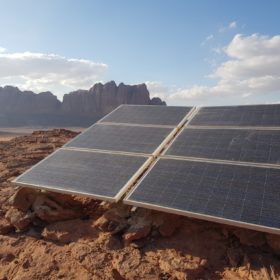
Orange Jordan adds 37 MW of solar under ‘wheeling’ scheme
With grid capacity a limiting factor, the Middle Eastern country has moved to foster private-to-private solar projects to meet industrial power demand.
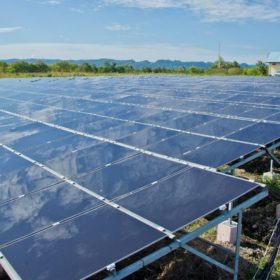
Chinese investment in renewables soars under Belt & Road initiative
A report by Greenpeace has found in the five years since China announced the continent spanning ‘One Belt, One Road’ infrastructure plan, investment in Belt & Road countries has supported 12.6 GW of wind and solar power generation capacity. That compares with just 450 MW which came online in the territories before 2014. The initiative has also supported 68 GW of new coal capacity.
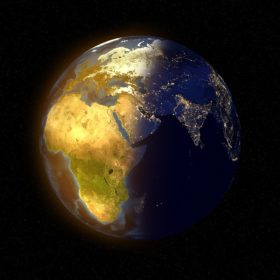
Global PV market: 114 GW to be installed in 2019, with continued growth onwards
According to the latest market forecast published by Wood Mackenzie, it seems that global PV installation figures will rise to 125 GW per year from 2020. Continued global capacity expansion will come in through a growing gigawatts-club.

Dubai has eyes floating on solar with visit to China
Dubai desires to become a global epicenter for clean energy and green technology. Its visit to China comes after last month’s issued RFP to explore floating PV development in the Arabian Gulf.
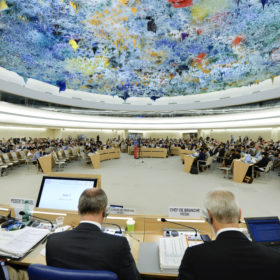
Solar industry counts seven human rights allegations
The Business & Human Rights Resource Centre has published a report looking at the human rights due diligence performance of the renewables industry and examined individual generation methods. The report finds that, while the solar sector is not top of the sad list, its vest also isn’t completely unstained.
