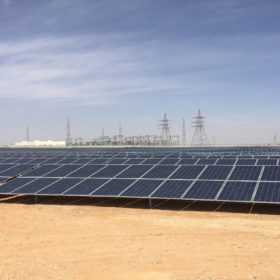
Jordan delays announcement of Round 3 PV tender winners
After the impressive results seen a month ago in Jordan’s Round 3 PV and wind auction, the successful developers have still not been announced, despite the government initially saying it would take two weeks to award the bids.
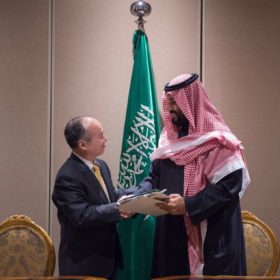
Saudi Government refutes claims 200 GW solar project has been scrapped
Responding to recent news reports that Saudi Arabia had abandoned its very ambitious plans to install 200 GW of solar PV by 2030, the country’s Ministry of Energy, Industry and Mineral Resources (MEIM) issued an official statement saying that the plans are still on track. It also outlined three components of a new power sector transformation plan.
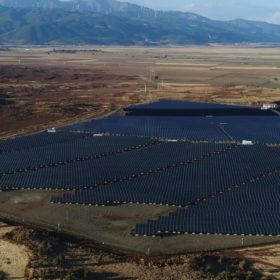
Turkey issues 1 GW PV tender, sets maximum price of $0.065/kWh
Three seperate tenders will be held for the deployment of large-scale solar plants across three locations, chosen by the Turkish Government. Selected developers will not be required to open a module factory, as in the last tender, but will have to buy at least 60% of the necessary modules from Turkish panel makers. The new maximum price has been set slightly lower than the final price of the previous 1 GW solar auction, held in 2017.
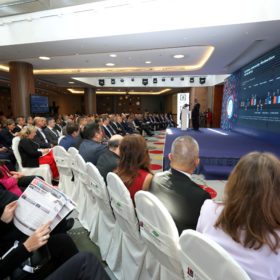
Beirut Energy Forum: Lebanon’s solar PV takes off
Lebanon’s International Beirut Energy Forum (IBEF) 2018, which took place last week in the country’s capital, saw the announcement of various solar tenders that depict the domestic PV sector’s take off.
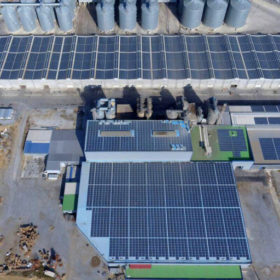
Turkey expected to reach 14 GW of solar in 2023
According to the Solar Energy Roadmap, released by Turkish PV association, Günder, the country may even achieve 38 GW of installed solar power by 2030. Several factors, however, could hinder this projected growth.
Turkey: 20 MW of new licensed PV capacity connects to the grid
Asunim Turkey has built and grid connected two new solar farms, thus boosting Turkey’s licensed PV market.

H1 2018 Inverter shipments: Utility-scale growth and China 31/5 fall-out
The global top three companies have not changed compared to the 2017 ranking. Still in the U.S., SMA has lost its pole position to Solaredge. Ingeteam, meanwhile, is capitalizing massively on stable growth in the utility-scale market, and jumps from rank 18 to fourth.
200 GW Saudi-Softbank solar plans abandoned – reports
Plans to establish the world’s largest solar energy project have been shelved, according to the Wall Street Journal. Saudi Arabia is instead said to be working on a new, “more practical” renewable energy strategy.
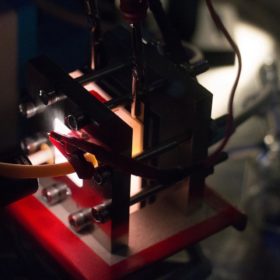
International research group develops solar cell with storage properties
Although the “solar flow battery” is currently considered too expensive by its own creators, a further improvement of its design and the use of emerging solar materials and new electrochemistry may open new opportunities for this kind of technology.
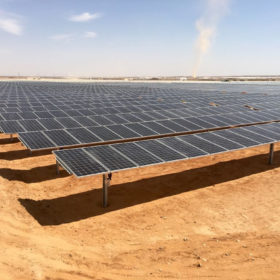
Jordan completes 250 MW second round of licensing
The kingdom has given the green light to a 50 MW proposal in Ma’an, the fifth project in the second round of its national commissioning process.
