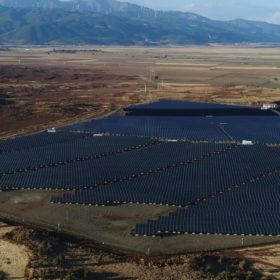
EBRD package to pay for 27 MW of solar in Turkish city
The London-based development institution will offer up a loan and grant to fund the construction of five solar plants at municipal sites across Gaziantep, as part of the lender’s Green City program.
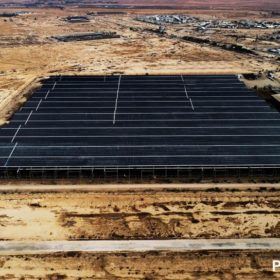
Israel allocates 1.14 GW of PV across two tenders, lowest price comes in at $0.02751/kWh
The Israeli authorities allocated more than 1.14 GW of PV capacity and 210 MWh of storage across two different tenders. In a first procurement exercise for the 330 MW/210 MWh Dimona solar-plus-storage project the winner was Israeli company Shikun & Binui Holdings Ltd. In another tender for innovative PV projects local developer Prime Energy secured 475 MW with the final average price of $0.0541/kWh.

Solar for hydroponics
An international research team has examined combining solar power generation with energy-intensive hydroponic horticulture and has found that this may be a viable solution depending on project size and available incentive policies. Their approach considered various factors impacting PV system efficiency, including environmental factors, the type of solar array, and the electricity demand from the hydroponic farm.
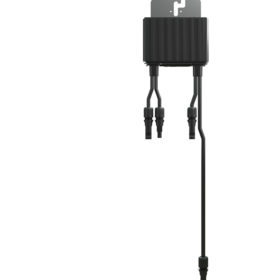
SolarEdge launches new power optimizers for residential PV
The optimizers are available in two versions that can be used with modules of up to 440 W and 500W. The devices have an efficiency of 99.5% and come with a 25-year guarantee.
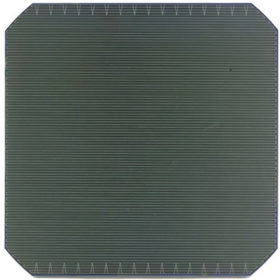
Large-area bifacial TOPCon solar cell with 23.01% efficiency
The n-type cell was built with phosphorus-doped LPCVD poly-Si passivating contacts and achieved a remarkable open-circuit voltage of 691.7 mV. According to its creators, with some adjustments the cell may be suitable for commercial production.
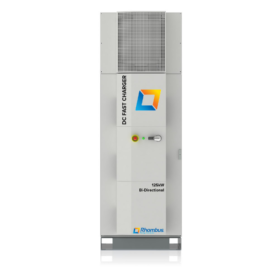
Ever heard of synchroinverters? Grid-stabilizing devices connecting renewables to distributed energy resources
A U.S.-Israeli consortium is developing synchroinverters – inverters that mimic a synchronous generator and are able to actively respond to the grid’s frequency changes while stabilizing the voltage. The new devices are expected to do this simultaneously and provide grid stability services in less than 16.67 milliseconds.
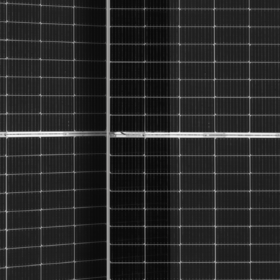
Illustrating the n-type advantage
In a new white paper, Chinese PV manufacturer JinkoSolar demonstrates how its latest ‘Tiger Neo’ module, featuring the 182mm n-type TOPCon cells, achieves lower energy costs. Based on total project costs for various scenarios in China, the Middle East and Europe, Jinko calculates advantages arising from both the cell technology and its chosen wafer format.

Bahrain issues two tenders for 7.5 MW of PV capacity
Through the two procurement exercises, Bahrain’s Sustainable Energy Authority (SEA) wants to deploy solar plants at the Ministry of Labour & Social Development and the Ministry of Education.
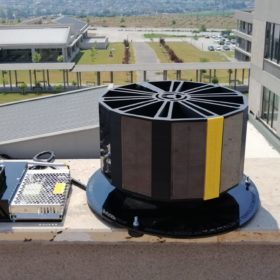
Photovoltaic rotary energy system for domestic applications, high-rise buildings
Developed by scientists in Turkey, a system prototype has operated at lower PV module temperatures and removed most of the dust accumulation. The researchers are now planning to improve the device by applying MPPT converter topologies.

Record solar numbers expected this year but IEA highlights pricing concern
The Paris-based body expects the world will have installed almost 160 GW of solar this year, a record number, but still not enough to keep the prospect of a net zero global economy by mid century in sight.
