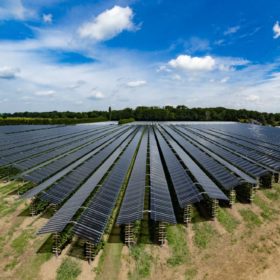
Special solar panels for agrivoltaics
BayWa r.e. and GroenLeven have designed special monocrytalline solar panels for five pilot agrivoltaic projects they are deploying in the Netherlands. They are testing weather-resistant 260 W glass-glass panels with different transparency levels.

Covid-19 weekly round-up: Solar Solutions show off again but CEOs voice confidence and Spain is moving its green economic recovery up a gear
Plus, solar funding is down and Australian rooftop installers are preparing for tough times ahead as one U.S. utility has warned customers to be alert to scammers hoping to benefit from the pandemic.

Solar Solutions International trade show is off – again
Touted as ‘the largest solar trade show in Europe’ just two weeks ago, this year’s event has been canned after exhibitors voiced concerns. Next year’s conference will take place in Haarlem, in the Netherlands, from March 16-18.

Solar causes highest power peaks under mixed-cloud conditions
Dutch researchers have shown that power peaks caused by solar generation may be stronger under partial cloudiness than clear skies. According to their findings, mixed-cloud conditions can enhance PV power production due to light reflected off clouds, as well as their intermittent shadows on arrays, which reduce module temperatures.
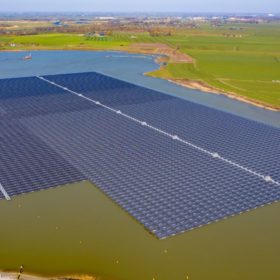
Baywa sells ‘largest floating PV park outside China’
The 27 MW Dutch project in Zwolle has been sold to a consortium featuring a provincial energy transition fund and a local energy co-operative in a deal backed by public funding.

Lobbying clears the way for European solar trade show in September
The organizers of the Solar Solutions International event which was postponed in March have persuaded the Dutch government industry events should not be subject to the same Covid-19 restrictions as concerts.
Grid code compliance in Europe – Ways to a fast and safe grid connection
How can grid stability be ensured while grid compliance standards across Europe are changing? Hear from the experts how different regimes lead to different field practices within compliance verification. Join pv magazine and our initiative partner meteocontrol and DNV GL to discuss grid integration.
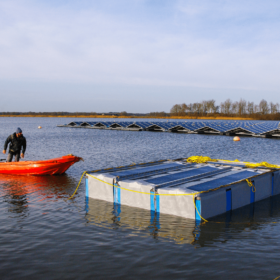
A flexible approach to offshore solar
Scientists in the Netherlands are trialing a floating solar installation based on flexible thin-film PV modules. The idea behind their concept is that such modules, in combination with a newly designed flexible racking system, will create a system able to roll with the movement of the water, rather than attempting to defy it.
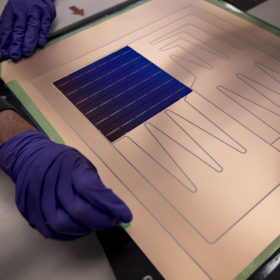
Heterojunction MWT solar module based on 23%-efficient cells
Scientists in the Netherlands have claimed that a heterojunction metal wrap-through solar module they are designing could offer a 4% performance improvement over conventional heterojunction panels.
European consortium bid to bring 25.4%-efficient heterojunction-IBC solar cell into mass production
The EU-funded Nextbase project aims to manufacture heterojunction, interdigitated back-contact solar modules for less than €0.275/W. Solar panels featuring the Nextbase cell tech are expected to have a conversion efficiency of 23.2%, according to the European Commission.
