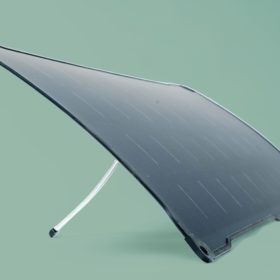
Canadian manufacturer releases carbon-fiber solar panel for boats
Lightleaf’s new 110 W PV module features monocrystalline solar cells from SunPower Maxeon, with 25.1% efficiency. It has a rigid carbon-fiber foam foundation instead of glass, and weighs just 2.5 kg.
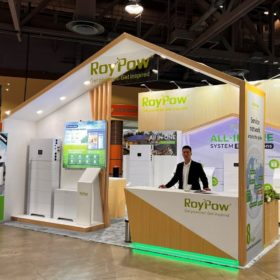
Manufacturer releases home backup solar battery
RoyPow introduced a new residential lithium-ferro-phosphate battery this week at Intersolar North America in Long Beach, California.

US startup introduces DC-to-DC solar EV charger
Enteligent’s new charger, which debuted at Intersolar North America this week, is powered by the sun and eliminates DC-to-AC power conversion.

Australia regretting belated transition as IRA sparks global race for renewables
When US President Joe Biden signed the $369 billion Inflation Reduction Act into law in August, it was lauded as the world’s most significant policy to combat climate change. However, some international critics and competitors claim the landmark bill thwarts their plans to foster green manufacturing at home. Australia is one country realizing that it may have already been left behind.

SolarEdge announces record revenues in 2022
SolarEdge’s revenue rose 58% year over year to $3.1 billion in 2022. It expects revenues for the first quarter of 2023 to be within the range of $915 million to $945 million.
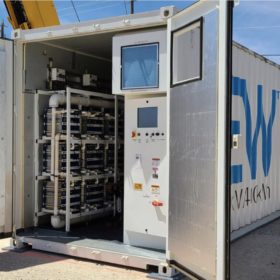
Saltwater flow battery added to solar-on-canal project
The University of California, Merced, has shown that up to 13 GW of solar capacity could be installed over California’s canals, which would require approximately 3 GW of energy storage.
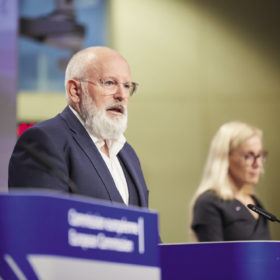
The Hydrogen Stream: Europe introduces new green hydrogen rules
The European Commission has presented the final version of its new rules for green hydrogen, with looser requirements to qualify hydrogen as “green.”
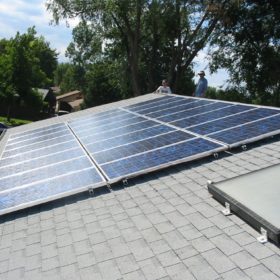
California’s new net-metering policy brings batteries to forefront
While NEM 3.0 is expected is to slash the rates paid for solar sold back to the grid, batteries can help to maintain the value of PV. However, the next wave of clean-tech adoption must focus on non-lithium batteries and take advantage of safe, affordable chemistries.
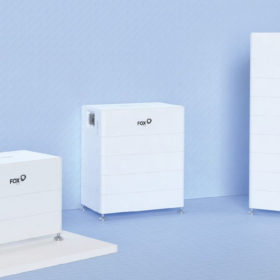
Weekend Read: Dawn of the store-age
Last year was another landmark 12 months for energy storage, with all indicators pointing to a massive surge in demand. Supply chain instability and inflation saw battery prices rise but the industry demonstrated an ability to swiftly react to geopolitical developments. We look at five trends driving the market.
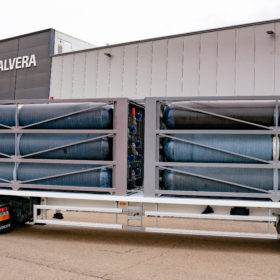
The Hydrogen Stream: Novel tube trailer for hydrogen transport
Calvera Hydrogen has claimed that its new 45-foot hydrogen tube trailer has the largest capacity in the world, Universal Hydrogen has unveiled a hydrogen-powered regional aircraft, and Masdar has signed a green hydrogen production deal with Austrian utility Verbund.
