
Solar starts strong in the US, growing 40% year over year in January
US solar generation reached new heights despite a year of challenges. Plus, pv magazine discusses “renewable” vs. “sustainable.”

US government to move forward with PV anti-circumvention investigation
The announcement of a new anti-circumvention investigation brings the US solar industry closer to what has been described as a worst-case scenario for companies that account for 80% of the country’s solar cell imports, with no domestic manufacturing capacity to alleviate the pressure.

SunPower launches whole-home backup solution
The US manufacturer has expanded the battery capacity options for its SunVault Storage product, up to 26 kWh and 52 kWh configurations.

Cathode formation issue could drive improvements in battery resiliency
Researchers at the Argonne National Laboratory have discovered a degenerative effect in the creation of cathode materials for sodium-ion batteries that could have significant impacts on the performance of sodium-ion batteries.
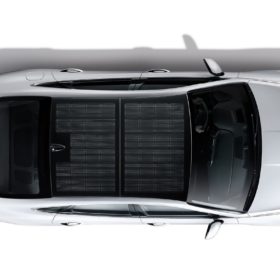
Hyundai Sonata hybrid is equipped with a solar roof
The 205W PV array adds nearly 1,000 miles of range each year and helps prevent battery discharge events that are responsible for four out of every ten roadside emergency breakdowns.
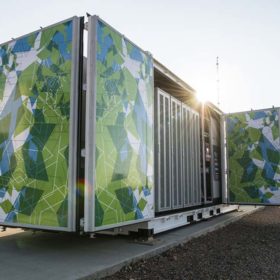
Developing better behind-the-meter energy storage
NREL researchers work on developing high energy density cells to advance stationary storage.

Energy storage installations set new records in the U.S. despite supply chain issues
Wood Mackenzie estimates that the US energy storage market broke records in Q4 2021, installing 1,613MW / 4727 MWh.
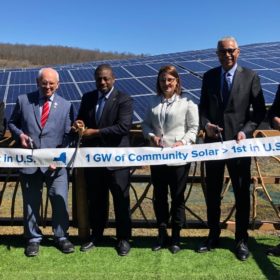
New York hits 1GW of community solar
The state has become the United States’ largest and most active community solar market, with a pipeline boasting more than 700 potential community solar installations

Hanwha commits to US manufacturing across the supply chain
Hanwha Solutions becomes the largest shareholder of REC Silicon and, pending passage of SEMA, commits to a multi-phase, multi-billion-dollar expansion across the full solar energy supply chain.
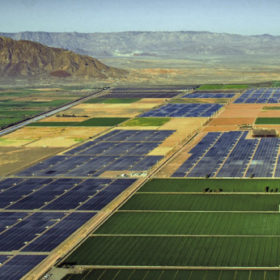
US legislation introduced to build renewable energy ‘superhighway’
Sen. Ed Markey’s Charge Act requires forward-looking transmission planning by utilities to lower prices and improve reliability. Among other sweeping changes, the bill requires hourly operational and greenhouse gas emissions reporting in a timely manner.
