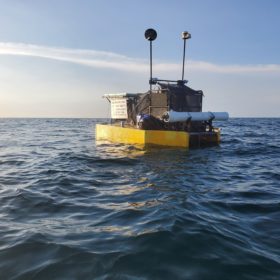
Modular PV and wave power desalination buoys from Canada
A floating, reverse-osmosis-based unit turns seawater into potable drinking water through the power of the sun and waves. Oneka developed the product, which requires no external electricity source and no land.
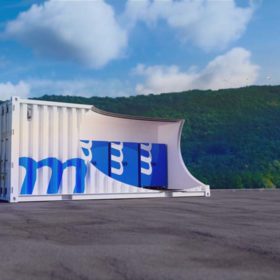
Repurposing EV batteries for offgrid applications
Moment Energy is one of several companies and projects supported by the ARC program, which aims to provide clean-energy storage to urban and remote diesel-dependent communities in the Canadian province of British Columbia.

US government may not wrap up PV anti-circumvention probe until August, says ROTH
The US Department of Commerce’s anti-circumvention probe has essentially shut down US procurement of PV modules, and the government is expected to take its full allotment of 150 days to make a ruling, says Philip Shen, managing director of ROTH Capital Partners.
Seven proven ways to improve LCOE in PV and storage: new inverters from Gamesa Electric
In this pv magazine Webinar, we will get a first look at the Gamesa Electric Proteus, the new generation of central inverters for PV and Storage applications that introduces significant improvements for large-scale projects.
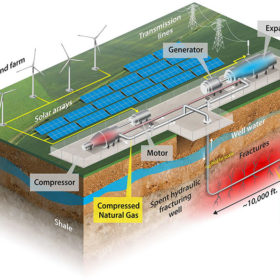
Storing renewables in depleted oil and gas wells
US researchers have proposed the use of hydraulically fractured oil and gas wells to store renewable energy via compressed natural gas, with the levelized cost of storage potentially coming in at $70/MWh and $270/MWh. They said wells could also be used to store other renewable gases such as carbon dioxide or hydrogen in the future.

Quantum adjustments for 23.9%-efficient inverted perovskite solar cell
Scientists in Canada fabricated a perovskite solar cell based on an inverted structure that achieved 23.9% efficiency, and maintained 92% of its initial performance after 500 hours of accelerated aging tests. By carefully controlling the thickness of the perovskite layer, the group was also able to gain control of “quantum mechanics” properties such as the movement of electrons within the layer and the wavelengths of light absorbed.

Could ‘hot carrier’ solar cells break the theoretical efficiency limit?
Up to 50% of the energy absorbed by a solar cell is lost as heat. Scientists are now developing a third generation of “hot carrier” solar cells that take advantage of this heat, potentially breaking the Shockley-Queisser limit of silicon-based PV.
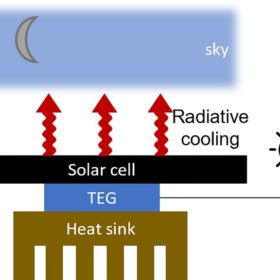
Radiative cooling-based solar cell with 50 mW/m2 of generation at night
Stanford University scientists have developed a solar cell with 24 hours of power generation via an embedded thermoelectric generator, which extracts power from the radiative cooler at night. Extra daytime power from excess heating comes from the cell itself.
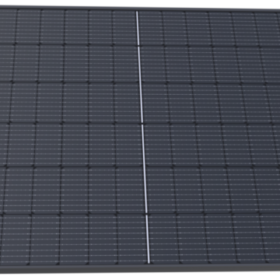
Boviet Solar shifts focus to 600W modules, N-TOPCon, HJT cells
Boviet Solar has announced plans to rebrand its modules, while shifting its focus to new cell technologies.
Are you tracking or stowing? – A financial analysis of stow strategies
Current large format PV modules trackers already move into stow at lower wind speed thresholds, which means they can be in stow very often, defeating the purpose a tracker is designed for. Arctech’s solution to the problem: raising the wind speed threshold that triggers stow position. In this pv magazine Webinar, we will analyze the economic effects of this as well as review the methodology that Arctech has used to derive the energy yield for the different scenarios considered. DNV will provide feedback on how Arctech can refine its methodology in the future.
