South African renewables jobs should be in coal regions
A study into the potential pitfalls of the shift to clean power in the nation’s coal-dependent energy mix, pointed out almost all of South Africa’s solar farms are far to the south and west of the coal regions likely to bear the brunt of job losses in a country which already has 29% unemployment.
‘Nuclear power is now the most expensive form of generation, except for gas peaking plants’
The latest edition of the World Nuclear Industry Status Report indicates the stagnation of the sector continues. Just 2.4 GW of net new nuclear generation capacity came online last year, compared to 98 GW of solar. The world’s operational nuclear power capacity had declined by 2.1%, to 362 GW, at the end of June.
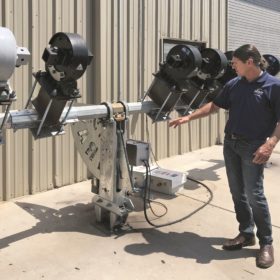
Array Technologies to raise $100 million in IPO
Array Technologies, a profitable solar-tracker company, is going public the old-fashioned way.
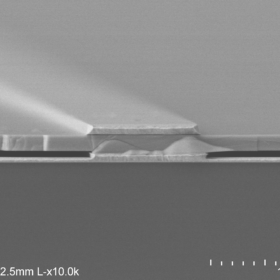
Air-bridge thermophotovoltaic cell with 30% efficiency, 99% reflectance
U.S. scientists have developed a thermophovoltaic cell that could be paired with inexpensive thermal storage to provide power on demand. The indium gallium arsenide (InGaAs) TPV cell absorbs most of the in-band radiation to generate electricity, while serving as a nearly perfect mirror.
General Electric, Shell looking for exits as energy transition accelerates
The two energy giants have announced plans to pivot away from fossil fuel assets as they expand their renewable footprints.
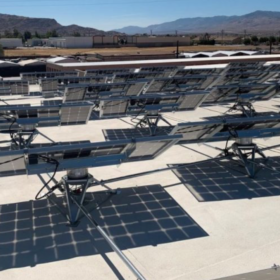
US solar racking industry now innovating, consolidating
With installers and developers trying to squeeze every kilowatt-hour out of every rooftop and every array, racking and trackers are the unsung heroes that secure and tilt panels, while maximizing output and protecting wiring and other gear.

Hemlock Semiconductor becomes vertically integrated polysilicon maker
The U.S. polysilicon manufacturer has acquired DuPont’s trichlorosilane business, in a move that will help it cut production costs and control supply.
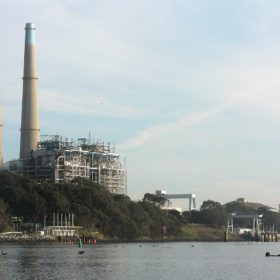
How does the US retire 236 GW of coal and 1,000 gas peaker plants?
Victory in the economic realm (increasingly the case with solar, solar-plus-storage and wind) is no guarantee of market victory if the regulations are stacked against renewables.
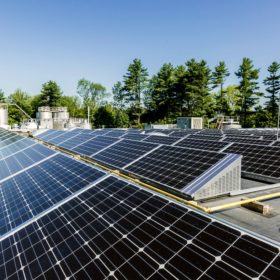
Probabilistic model indicates PV module warranty reliability
U.S.-Spanish researchers have proposed a new way to assess the reliability of PV modules and their warranties. It is impossible to fulfill a 25-year warranty if the threshold of returned modules exceeds 5% and the annual degradation rate is over 0.73%.

The weekend read: Solar shines in Canada’s oil patch
The quiet prairie landscape of Vulcan County, a rural stretch of southern Alberta, is set to become the site of Canada’s largest solar energy facility – the 400 MW Travers Solar Project. And with the region’s oil industry struggling with low demand and lower prices, solar could provide a lifeline to Alberta in meeting energy demand and providing jobs.
