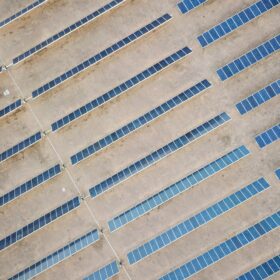
Africa’s solar capacity surpasses 20 GW
Africa’s solar capacity has exceeded 20 GW, with more than 10 GW of projects under construction, led by utility-scale solar, which represents 70% of ongoing development, according to the Africa Solar Industry Association (AFSIA).

Acwa Power secures two solar-plus-storage projects in Morocco
Riyadh-based energy company Acwa Power will develop Morocco’s Noor Midelt II and Noor Midelt III solar-plus-storage projects. Together, they have a combined solar capacity of 800 MW alongside 1,200 MWh of battery energy storage.
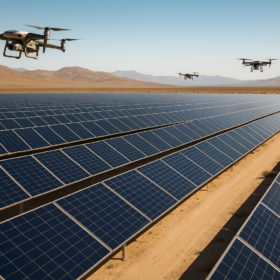
New technique to geo-label PV modules in utility-scale solar parks
Scientists in Morocco have developed a method that uses the metadata of PV plants’ infrared images to label them geographically. The automatic database can then be used in deep learning models and significantly reduce the time required for data labeling.
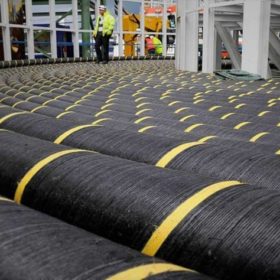
UK rejects CfD bid for 10.5 GW Morocco solar-wind subsea cable
The UK government has rejected a contract-for-difference (CfD) application for the proposed Xlinks interconnector, a 3,800 km submarine cable to deliver power from a planned 10.5 GW solar-wind facility in Morocco to the UK grid.
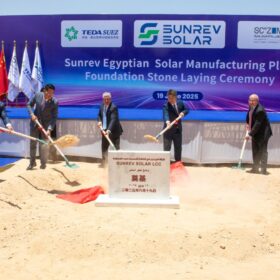
China’s Sunrev Solar to build 2 GW solar cell, module factory in Egypt
Sunrev Solar is building two integrated factories in Egypt with 2 GW of capacity each for solar cells and modules. The second phase will localize production of raw materials including silicon ingots and wafers.
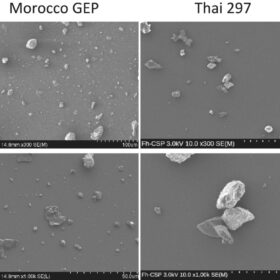
Different dust, different impact on PV module performance
Scientists in Germany have collected dust from Qatar, Morocco and Thailand to analyze the impact on the performance of uncoated solar glass and uncoated PV mini-modules. Their analysis has shown that dust coverage could range from 4% to 60%.

Novel MPPT technique uses fuzzy logic control with new inputs
Academics have developed a maximum power point tracking (MPPT) algorithm for PV systems that combines incremental conductance with fuzzy logic control. The inputs used are the sum of conductance and incremental conductance and its rate of change. It had an average efficiency of 97.7%.
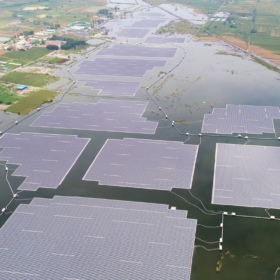
Water-based photovoltaics reach global capacity of 21.18 GW
An international research team has developed an index-based remote sensing method to see trends in the global development of water-based PV. It has found that China currently accounts for 80% of the global total deployed capacity.

Testing 54 different combinations of solar-assisted heat pumps
Researchers in Germany have modeled dozens of indirect-expansion solar-assisted heat pump systems using photovoltaic-thermal panels for single-family homes in Munich, Berlin, and Hamburg. Simulations accounted for local weather, electricity use, and thermal demand.

Egypt approves four solar, wind projects totaling 400 MW
The Egyptian government has approved four solar and wind projects totaling 400 MW, with a combined investment of $388 million. The two solar and two solar-wind hybrid projects will sell energy directly to industrial customers.
