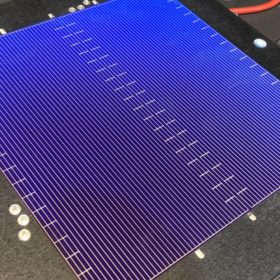
The impact of annealing on copper-plated heterojunction solar cells
A UNSW-led team found that annealing conditions significantly affect stress, strain, and microstructure in copper-plated heterojunction solar cell contacts, with fast annealing increasing microstrain in both copper and indium tin oxide.
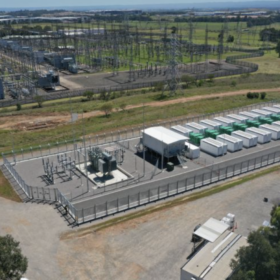
Australia’s Transgrid shortlists 2 GW of batteries for NSW grid
Australian transmission company Transgrid has shortlisted nine battery energy storage projects with a combined capacity of 2 GW to provide essential system strength services to the electricity grid in New South Wales from later this year.
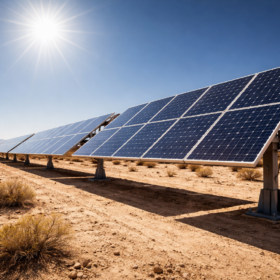
UNSW study finds tracker-based PV systems experience higher UV degradation than fixed-tilt arrays
New research from the University of New South Wales shows that PV module degradation varies widely with system design and location, driven by UV exposure, temperature, humidity, and atmospheric conditions. Tropical and desert regions face the highest stress, highlighting the need for climate-specific testing and system design.
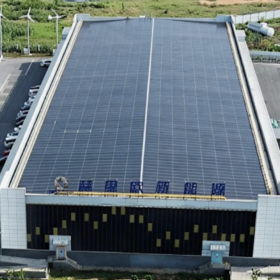
ClearVue secures IEC certification for metal-backed solar panels
Building-integrated PV (BIPV) company ClearVue Technologies is a step closer to commercial deployment of its metal-backed solar panels after securing International Electrotechnical Commission (IEC) certification for the integrated rooftop system.
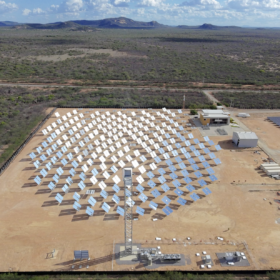
RayGen rolls out 1 MW ‘solar hydro’ power plant in Brazil
Australian solar and thermal energy storage company RayGen says it has achieved a major international milestone with the commissioning of a 1 MW integrated solar electricity and hydro energy storage plant in Brazil.
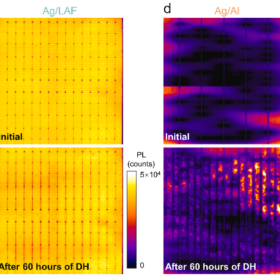
UNSW unveils new ageing method to assess TOPCon solar module degradation
UNSW researchers developed a chemically selective, nitrate-based, single-sided accelerated ageing method for TOPCon solar cells that replicates the mildly acidic environment inside EVA-encapsulated modules. The proposed approach enables rapid, physically meaningful screening of front-side metallisation stability, reliably predicting module-level degradation and reducing development time and costs, according to its creators.
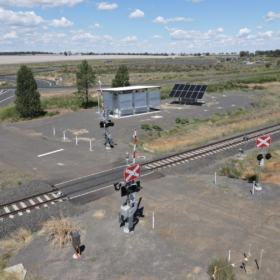
Inland Rail deploys solar-powered level crossings in Australia
Australia’s Inland Rail project says it has installed standalone solar power systems at two level crossings, removing the need for grid connections as construction progresses.
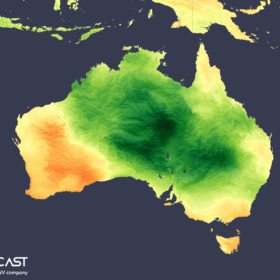
Wettest February since 2011 cuts irradiance across most of Australia
In a new weekly update for pv magazine, Solcast, a DNV company, reports that Australia’s wettest February in 15 years produced solar irradiance deficits of 15–30% across the country’s central and eastern regions.

Enphase launches AI home energy management system
Enphase Energy has introduced an AI software platform in Australia and New Zealand that enables homeowners to reduce energy costs, increase clean energy self-consumption, and control key household appliances.
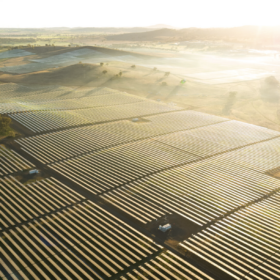
Ultra-low-cost solar could enable 2,000 GW market in Australia
Researchers from the Australian Centre for Advanced Photovoltaics say ultra-low-cost solar could deliver 1,000 TWh annually for domestic use and 2,600 TWh for exports under Australia’s long-term energy transition scenarios.
