Improving PV-powered water electrolysis with external fields
Australian researchers have analyzed different ways to improve the efficiency of PV-powered water electrolysis for hydrogen generation. They include the use of magnetic fields, light energy, ultrasonic fields, and pulsating electric fields. Energy costs remain prohibitive, but molecular movement and the redistribution of molecules in water during electrolysis could open a path to viability.
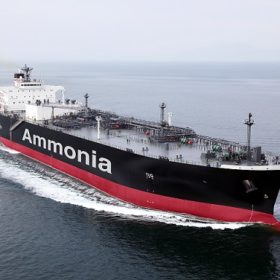
Green ammonia breakthrough a potential boon for solar-powered exports
Scientists from the University of New South Wales and the University of Sydney have made a breakthrough in the development of green ammonia. Their findings could alter the global industry with the help of solar to produce green ammonia for export to countries like Japan and Germany, instead of straight hydrogen.
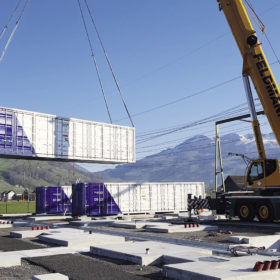
WoodMac predicts 30% drop in Asia-Pacific front-of-meter battery costs by 2025
A new Wood Mackenzie report suggests that costs for front-of-the-meter battery storage systems in the Asia-Pacific region could fall by 30% by 2025. The declining costs are already having a palpable impact, as 2021 has opened with a slew of large-scale battery project announcements.
Industrial processes key for Australian solar, wind projects
Last year was the time for mega-solar projects to strike record low prices – $0.0135/kWh in Abu Dhabi for the unimaginably vast 2 GW Al Dhafra project. Not to be left behind, some Australian project developers are pursuing equally grand plans, with clean-tech guru Michael Liebreich saying that their likelihood for success will lie in what the proponents plan to do with the vast amount of clean, cheap energy.

New phased microgrid approach for industrial-estate development
Peel Renewable Energy is about to energize a 1.2 MW solar farm in Australia, as part of a fresh approach to microgrids. Infrastructure remains small, but the renewables-powered microgrid can grow to meet the needs of incoming businesses.
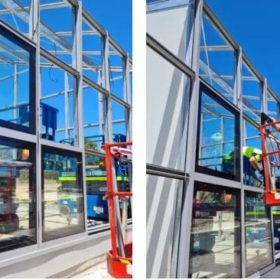
Transparent PV-based greenhouse takes shape in Australia
Western Australia-based solar glass developer ClearVue has commenced installation of its transparent solar PV glazing panels at what will be the world’s first clear solar glass greenhouse.
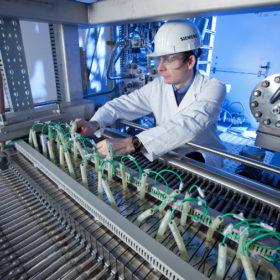
Australia wants to certify green hydrogen with German expertise
The Australian Smart Energy Council and Deutsche Energie-Agentur will work together to develop a scheme to certify renewable hydrogen and carbon-neutral power fuels.
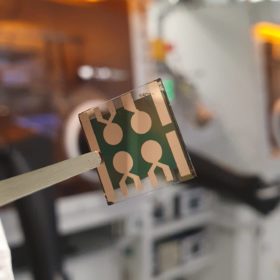
Inverted perovskite solar cell with 21.1% efficiency and high moisture resistance
Australian scientists have built a perovskite solar cell based on 2D and 3D salts. By adding a fluorinated lead salt in the processing solution – normally used to form 3D methylammonium lead iodide – they were able to achieve a 21.1% efficiency, an open-circuit voltage of 1.12 V, a short-circuit current of 22.4 mA/cm2, and a fill factor of 84%.
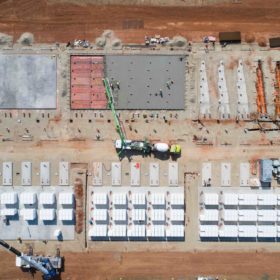
Neoen plans 500 MW / 1000 MWh battery in Australia
Neoen Australia has filed planning documents for a 500 MW / 1000 MWh big battery to be built west of Sydney.

Australian iron ore producer, South Korean steelmaker agree to green hydrogen future
Fortescue Metals Group Chairman Andrew ‘Twiggy’ Forrest returned to Western Australia last week after a four-month worldwide search for green energy projects and resources. One of the deals secured on the trip was a circular green hydrogen partnership with South Korean steelmaker Posco.
