
New Zealand sets 10 kW default export limit for rooftop solar
New Zealand’s Electricity Authority has introduced a 10 kW default export limit for residential solar and battery systems to standardize grid access and support higher penetration of distributed energy.
Spark secures Australian approval for massive solar and battery project
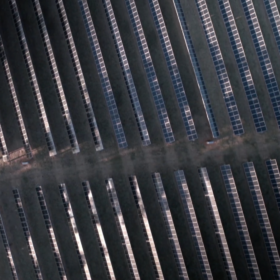
Spark Renewables has secured final state planning approval for a solar and battery project that will add 800 MW of PV and 356 MW/1,574 MWh of energy storage capacity to the grid in New South Wales, Australia.
Solar keeps slimming down while power rises
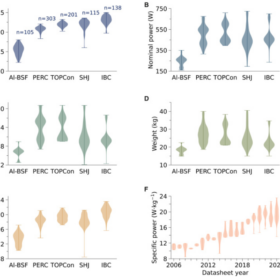
An international study found that the specific power of commercial silicon solar modules increased from 8.5 W/kg in the early 2000s to 23.6 W/kg today, driven by advances in module design, bifaciality, and temperature management. The researchers highlighted that glass and framing dominate module weight, and considering operating conditions like nominal operating cell temperature and rear-side illumination is essential for accurate PV system design.

Heterojunction vs. TOPCon in perovskite-silicon tandem
Scientists in Australia claim that TOPCon cells are rapidly closing the open-circuit voltage gap with heterojunction counterparts, now under 10 mV, while offering greater wafer tolerance and high industrial scalability. Despite slightly lower efficiency, TOPCon-based perovskite/silicon tandems can achieve a levelized cost of energy comparable to heterojunction-based tandems due to reduced fabrication costs, according to the researchers.

South Australia opens up new areas for renewable energy opportunities
South Australia has opened up more than 11,000 square km of land for the potential development of renewable energy projects as it continues the march to its target of 100% net renewables by 2027.
The impact of annealing on copper-plated heterojunction solar cells
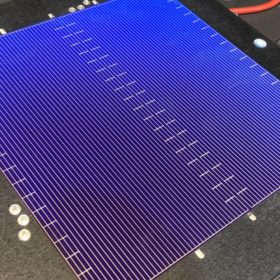
A UNSW-led team found that annealing conditions significantly affect stress, strain, and microstructure in copper-plated heterojunction solar cell contacts, with fast annealing increasing microstrain in both copper and indium tin oxide.
Australia’s Transgrid shortlists 2 GW of batteries for NSW grid
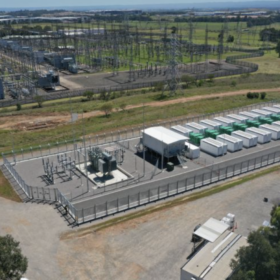
Australian transmission company Transgrid has shortlisted nine battery energy storage projects with a combined capacity of 2 GW to provide essential system strength services to the electricity grid in New South Wales from later this year.
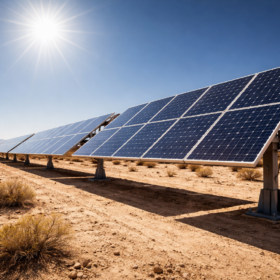
UNSW study finds tracker-based PV systems experience higher UV degradation than fixed-tilt arrays
New research from the University of New South Wales shows that PV module degradation varies widely with system design and location, driven by UV exposure, temperature, humidity, and atmospheric conditions. Tropical and desert regions face the highest stress, highlighting the need for climate-specific testing and system design.
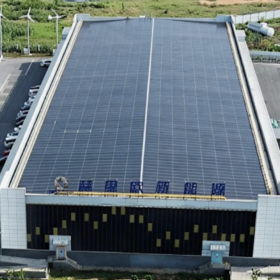
ClearVue secures IEC certification for metal-backed solar panels
Building-integrated PV (BIPV) company ClearVue Technologies is a step closer to commercial deployment of its metal-backed solar panels after securing International Electrotechnical Commission (IEC) certification for the integrated rooftop system.
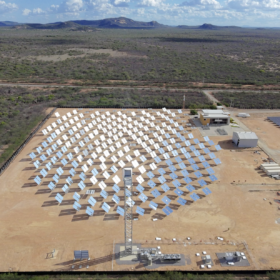
RayGen rolls out 1 MW ‘solar hydro’ power plant in Brazil
Australian solar and thermal energy storage company RayGen says it has achieved a major international milestone with the commissioning of a 1 MW integrated solar electricity and hydro energy storage plant in Brazil.
