
CSIRO partners with Google to prototype grid-forming inverters
Scientists from Australia’s national science agency and the electricity research and development arm of Google have developed a new ‘smart’ inverter they claim is almost twice as fast and about 50% more efficient than existing commercial inverters.
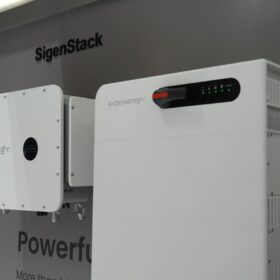
Sigenergy launches new energy storage solution for C&I segment
Chinese manufacturer Sigenergy has launched a new modular energy storage solution that combines a hybrid inverter and battery pack with a built-in energy management system. The inverter series offers a range of power options from 50 kW to 110 kW.

Researchers discover method to help perovskite solar cells self-heal
A global team of researchers – lead by Monash University in Melbourne, Australia – says it has made a breakthrough that could make perovskite solar cells more reliable and efficient.
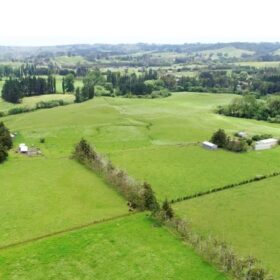
Singapore fund acquires solar developer in New Zealand
Singapore-based renewable energy fund manager SC Oscar has purchased New Zealand solar project developer Rānui Generation as part of its strategy to build a portfolio of renewable energy assets in New Zealand and Australia.
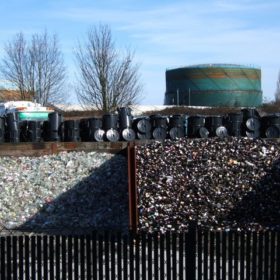
AGL partners with Elecsome on solar panel recycling plan
AGL Energy has teamed with solar panel recycler Elecsome to explore the development of a PV materials recovery facility at the site of the coal-fired Bayswater power plant in New South Wales, Australia.
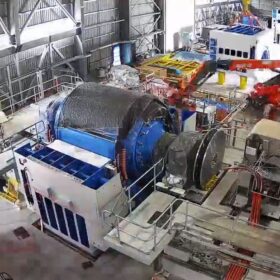
Australian grid operator to boost system strength with synchronous condensers
Transgrid – the owner of the power grid in New South Wales, Australia – aims to roll out up to 14 synchronous condensers and 4.8 GW of batteries with “grid-forming” capability to stabilize the electricity grid as coal-fired power plants retire and more renewables come online.
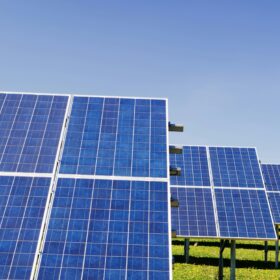
Australian capacity tender flooded with 40 GW of renewable energy projects
Australia’s first national Capacity Investment Scheme auction has been inundated with expressions of interest, with the federal government revealing that investors have tabled 40 GW of new renewable energy generation projects such as wind and solar.
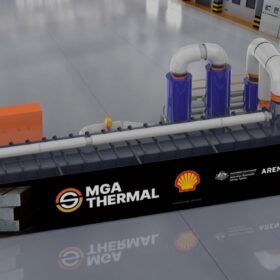
Thermal energy storage tech to bolster industry decarbonisation
Long duration energy storage developer MGA Thermal is one step closer to commissioning its behind-the-meter demonstration plant after receiving a $2.48 million windfall from the Australian Renewable Energy Agency.

Australia: Drilling survey offers positive assessment for 120 GWh pumped hydro project
Plans to build a 5 GW/120 GWh pumped hydro energy storage system in Queensland’s Pioneer Valley have received a positive boost with geotechnical investigations revealing the site is ideally suited for dam and tunnel construction.

Study estimates global floating solar potential at 1,302 TWh
A UK-based research team has calculated the global potential of deploying floating solar arrays on almost 68,000 lakes and reservoirs. It found some countries could generate the majority of their electricity needs from floating solar panels, while five could meet all their electricity demand.
