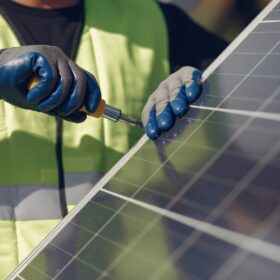
Australian researchers eye redesigned panel as part of recycling plans
Researchers at the University of New South Wales (UNSW) plan to develop a redesigned PV module for easier recycling, with AUD 5 million ($3.4 million) in federal government funding to help transform Australia’s solar panel recycling industry.

Smart window company sees buildings as renewable energy hubs
ClearVue Technologies, an Australian smart-window tech manufacturer, has secured a repeat order from the United States.
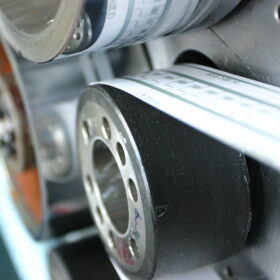
Using digital twin, roll-to-roll platform to design high-performance organic PV devices
An international team of researchers have demonstrated how to speed up the research and development of scalable, high-performing organic solar cells by using an automated, high-throughput platform. It relies on digital twin technology and roll-to-roll (R2R) printing in a closed-loop system.
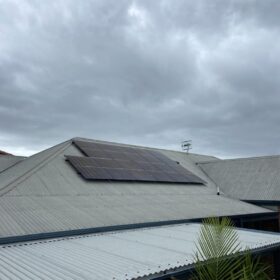
Australia’s rooftop solar market declines as volumes fall
The rollout of rooftop solar in Australia has slowed, with a total of 248 MW of new capacity registered across the country in June, down 14% from the previous month and marking the lowest tally since January.

Rio Tinto building more solar at mining sites
Multinational mining company Rio Tinto has finished installation work at the Diavik Diamond Mine in Canada and has announced plans for two 5.25 MW plants at a bauxite mine in Australia’s Northern Territory.
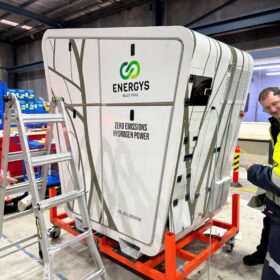
Remote telecom towers powered by 10 kW hydrogen generators
An Australian-made, 10 kW renewable hydrogen generator has been installed 120 km east of Melbourne, as part of a pilot project to provide backup to telecom towers disabled by outages.
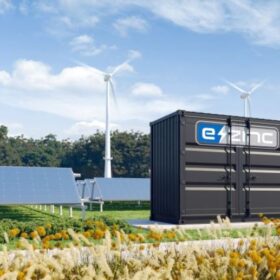
Zinc batteries: Redflow teams with Stanwell on 400 MWh project, e-Zinc secures $31m commercialization funding
Australian zinc bromide flow battery specialist Redflow has struck a partnership with Queensland state-owned generation company Stanwell to work together on the development of a non-lithium long-duration battery energy storage solution for use in a 400 MWh project. Meanwhile, Toronto long duration energy storage specialist e-Zinc has secured $31 million which will go towards developement and completion of its pilot manufacturing facility in Mississauga, Ontario.
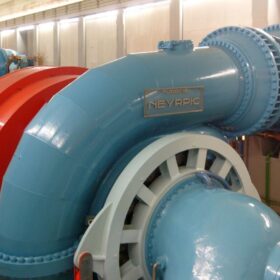
Australian state prioritizes pumped hydro projects
Three pumped hydro projects that would deliver a combined 1,035 MW/9,480 MWh of dispatchable capacity are among six projects that have been declared critical, state-significant infrastructure by the New South Wales government in Australia.

Australian community microgrid calls on residential solar to support energy security
Construction has begun on a solar and battery-based microgrid that is to provide the northeast Victoria town of Corryong with crucial energy resilience, helping keep the power on during emergencies such as bushfires and storms.

Property owners look to large-scale solar to revitalize land
Renewables developer Lodestone Energy will build a 220 MW solar farm on one of New Zealand’s iconic high-country grazing properties, with the landowners targeting the PV facility to help rehabilitate redundant land.
