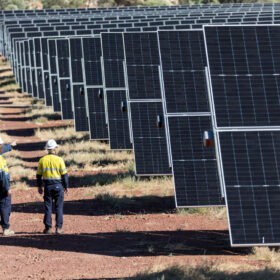
APA powers up Australia’s largest remote grid solar farm
Gas and electricity company APA Group has launched Australia’s largest remote-grid solar farm, announcing the official opening of the 88 MW Dugald River Solar Farm in outback Queensland.
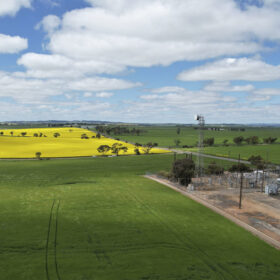
Zen Energy starts building 111 MW/270 MWh battery in Australia
Australian renewable gen-tailer Zen Energy is set to build the second-largest battery energy storage system in the state of South Australia, in a move that is expected to improve the reliability of electricity supply.

The Hydrogen Stream: Germany’s hydrogen strategy takes shape
Germany made progress with its hydrogen strategy, while Australia announced plans for a hydrogen feasibility study.

Researchers identify path to fast-charging lithium-sulfur batteries
Australian researchers have designed a new catalyst that has the potential to deliver a new generation of lithium-sulfur batteries that can be charged in less than five minutes, instead of several hours.
Construction begins on 2 GWh of storage in Australia
Western Australian government-owned utility Synergy has commenced construction of its third grid-scale battery as the state government looks to ramp up energy storage capacity to support its planned transition from coal-fired power generation to renewables.
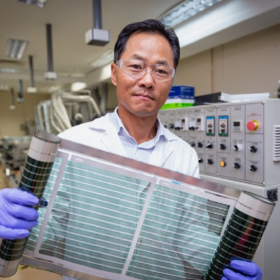
Researchers claim record efficiency for roll-to-roll fabricated perovskite PV cell
Researchers led by Australia’s Commonwealth Scientific and Industrial Research Organisation (CSIRO) recorded an 11% efficiency on 50 cm² large-scale solar panels consisting of optimized roll-to-roll fabricated hybrid perovskite solar cells.
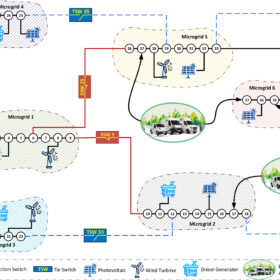
Energy sharing in multi-microgrid systems with V2G
Researchers in Australia have developed a reconfigurable structure of a multi-microgrid to enhance the penetration of distributed energy resources in the presence of vehicle to grid technology (V2G) and found that both technical and economic aspects of the system have improved significantly.
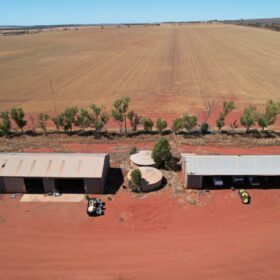
bp increases stake in 26 GW Australian renewable energy hub
Investment bank Macquarie Group has sold its share in the 26 GW Australian Renewable Energy Hub megaproject proposed for Western Australia’s Pilbara region to oil and gas giant bp.
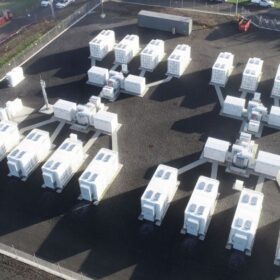
New Zealand welcomes first big battery to national grid
New Zealand’s transition to a renewable energy future has taken a significant step forward with the nation’s first grid-scale battery energy storage project now offering injectable reserves to the electricity market for the first time.

Car batteries can optimize the power grid
Australian researchers have found that if 10% of vehicles are electric and utilize V2G connections, they could reduce peak electricity demand at local substations by 6% and save car owners hundreds of dollars per year on charging costs.
