
Portugal might add 2.57 GW of new solar by end 2023
The Portuguese government has announced a national energy-saving plan for the 2022-23 period. It expects to add 1,140 MW of new solar by the end of this year.
Residential PV installation costs rising in Portugal
PV panels cost around €420 ($419) for a small 0.3 kW to 0.5 kW installation in 2021, according to data from service-hiring app Fixando. This year, installation costs have risen by about 40.5% to around €590.
Portugal added 546 MW of solar in H1
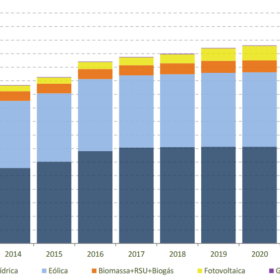
Portugal’s cumulative PV capacity hit 2.19 GW in June, outpacing the growth of other energy sources.
Predicting solar power output with limited data sizes
Researchers in Greece have developed three different transfer-learning strategies for solar power forecasting. The techniques are based on a stacked long short-term memory model, which is a kind of recurrent neural network that can learn order dependence in sequence prediction problems.

Green hydrogen project wins €10 million grant from Portuguese government
Fusion Fuel is set to receive a €10 million ($10.09 million) grant from the Portuguese government to develop a 6.6 MW green hydrogen project.

The Hydrogen Stream: $8 billion green hydrogen facility near the Suez Canal
Egypt is taking several steps to support renewable and hydrogen projects, aiming to produce 42% of its electricity from renewable sources by 2030. Meanwhile, a team of researchers led by UCLA developed a method for predicting platinum alloys’ potency and stability; Iberdrola and bp are working on strategic collaboration, including large-scale green hydrogen production hubs in Spain, Portugal and the UK.
EPC tender for solar-powered hydrogen project in Portugal
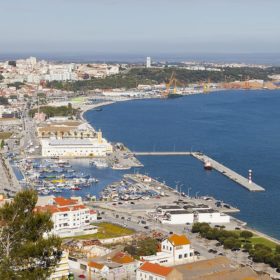
Hyperion Renewables launched an EPC tender for its Green H2 Setúbal Project back in March. Seven companies are now competing to build a plant with a green hydrogen production capacity of 135 kg (1,500 Nm3) per hour. The plant will be fed by 12 MW of solar PV.
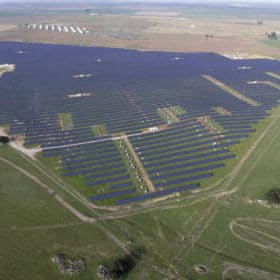
Portuguese industry group preparing licensing guide for onshore renewables
Portugal’s main renewables industry group is preparing a licensing guide for onshore energy projects. It aims to simplify and clarify all stages of the licensing process in order to expedite the implementation of solar and wind projects.
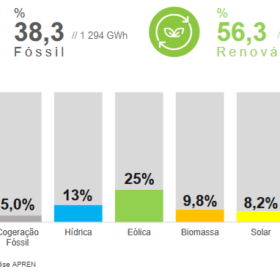
Portuguese solar generation hit highest point ever in May
Solar generation accounted for a 8.2% of Portugal’s total electricity production in May – a new record for the country.
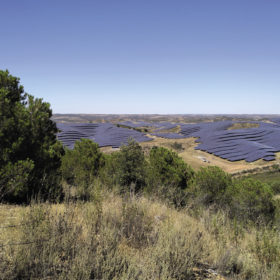
The weekend read: Portugal’s enormous PV potential
Portugal’s PV tenders have generated headlines on the back of world-record tariffs. But the country has failed to add meaningful capacity and is now struggling to establish a workable licensing system. Merchant solar shows enormous potential to drive the market, but will politicians listen?
