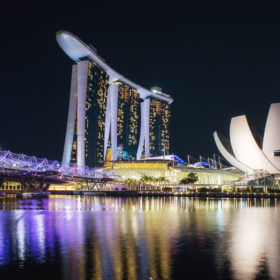
Singapore seeks proposal for 100 MW of floating PV
Singapore’s Economic Development Board has issued a request for information related to the potential deployment of a large-scale floating solar system to generate energy for private sector consumption.
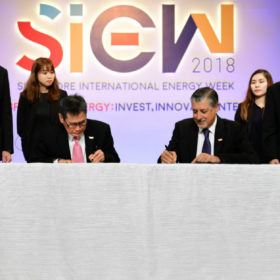
IRENA and southeast Asian nations pledge action on PV
The International Renewable Energy Agency wants to unlock the PV potential of the Asia-Pacific region with technical and planning support. It says a better flow of knowledge is needed to close the gap on a regional aim of generating 23% of energy from renewables by 2025.

Another Facebook data center goes solar
The company data center in Singapore will be provided with solar power by Sembcorp Industries under a 20-year PPA. The required electricity will be generated across 900 rooftop PV systems totaling 50 MW.

Solar performance polluted by urban haze
Research conducted over several years by scientists at the Massachusetts Institute of Technology (MIT) demonstrates that air pollution in cities can put a dampener on the performance of PV panels which, if not taken into account, can threaten a project’s viability.
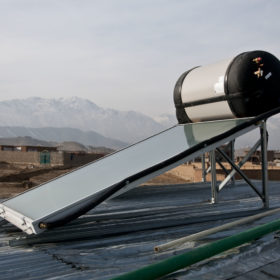
Macquarie puts faith in Asia-Pac solar
The Conergy brand has changed hands again with the Australian infrastructure giant acquiring the company’s Asia-focused business from its previous US-based fund management owners. Macquarie may be positioning itself to take advantage of a flood of cheap Chinese-made panels.
Singapore: Sembcorp Solar awarded 50 MW rooftop PV tender
Sembcorp Solar Singapore Pte Ltd has been awarded 50 MW worth of solar PV rooftop projects by Singapore’s Housing & Development Board (HDB) and Economic Development Board (EDB). The project is expected to be completed by 2020.

Greenko to buy Orange Renewable for $1 billion
Greenko, backed by Singapore’s GIC and the Abu Dhabi Investment Authority, is set to buy the solar and wind portfolio of Orange Renewable. The move will constitute Greenko’s largest acquisition and will add 1 GW to its operational capacity to raise the company’s portfolio to 4.2 GW, just shy of the capacity held by ReNew Power Ventures, the country’s largest renewable energy company.

Singulus and SERIS continue HJT research after proof of concept
By proving inductively coupled plasma can be used for HJT-cell production, the research institute and corporate partner will now work on ways to find cost-effective production methods with the aim of making a GW scale roll out of HJT cells viable

Singapore issues first tender for floating PV projects
Singapore’s National Water Agency is seeking proposals to deploy two floating solar plants with a combined capacity of 2.5 MW at the Bedok Reservoir and Lower Seletar Reservoir.

SERIS researchers develop new multi-cSi texturing technique
Scientists from the Solar Energy Research Institute of Singapore (SERIS) have announced the development of a new wet chemical process to allow multi-cSi wafers to be cut with diamond wire saw technology, and subsequently textured to reduce their reflectivity.
