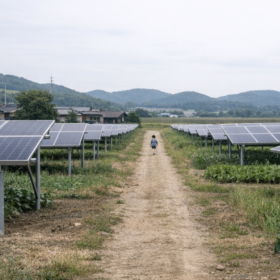
South Korea targets 2,500 community solar cooperatives by 2030
The South Korean government has launched a national drive to establish community-owned village solar cooperatives across the country, with more than 500 sites to be selected this year and KRW 550 billion ($366.4 million) in national funds earmarked for 2026.
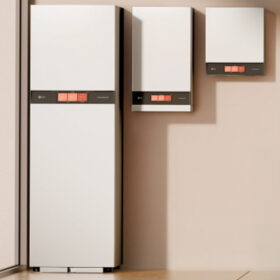
LG debuts new indoor air-to-water heat pumps
The Korean manufacturer has expanded its Therma V R290 heat pump line with three indoor unit options to improve installation flexibility. The new products are designed to deliver heating performance at ambient temperatures as low as -28 C and domestic hot water output of up to 75 C.
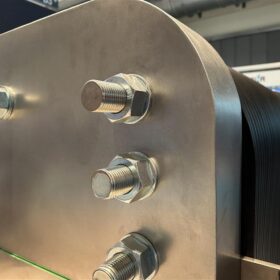
The Hydrogen Stream: BP and Iberdrola near Spain’s largest H₂ project
BP and Iberdrola say their 25 MW green hydrogen project in Spain is nearing commissioning, while Moeve has approved a final investment decision for a 300 MW project in Spain.

Alfa Laval to build South Korea’s first large-scale liquid air storage system
Swedish engineering company Alfa Laval and South Korea’s Institute for Advanced Engineering (IAE) plan to build a liquid air energy storage (LAES) facility designed to liquefy up to 10 tons of air per day for long-duration grid balancing.
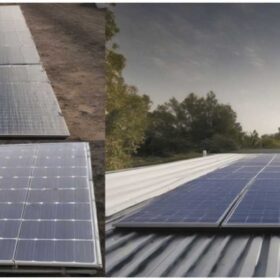
How to address imbalance datasets in solar panel dust detection
Researchers from South Korea improved solar panel dust detection by using SMOTE and stable diffusion (SD) augmentation, with SD boosting detection accuracy from 76.5% to 98.9% while preserving spatial realism.
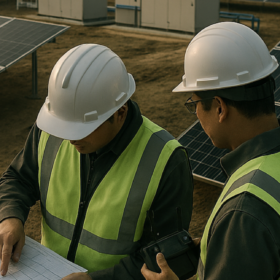
South Korea eases solar siting rules to cut permitting delays for PV projects
South Korea has passed legislative amendments to limit the ability of local authorities to impose separation distances on solar projects, removing a major permitting barrier for PV developers.
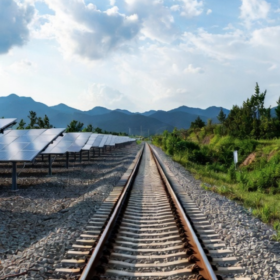
South Korean railway operator signs solar deal with Qcells
Korea National Railway has signed a memorandum of understanding with South Korea’s Qcells to expand solar deployment across railway assets as part of its energy transition strategy.

South Korea to invest $223 million in next-generation distributed grid
The South Korean government has announced plans to invest KRW 321 billion ($222.6 million) in 2026 to upgrade regional distribution networks, deploy 85 energy storage systems, and expand solar integration while piloting microgrids and market reforms.

AI can now predict solar cell efficiency from wafer quality
Korea University researchers have developed a machine-learning framework that predicts solar cell efficiency from wafer quality, enabling early wafer screening and optimized production paths. Using over 100,000 industrial data points, the approach combines predictive modeling, process optimization, and explainable AI to support photovoltaic manufacturing.
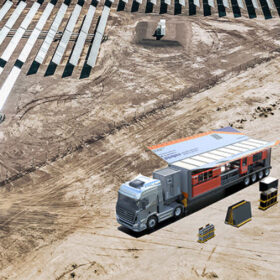
South Korea’s Won Kwang S&T launches mobile solar panel recycling solution
Won Kwang S&T has developed a mobile, on-site solar module recycling system for utility-scale PV plants. The SolreBorn unit can reportedly process up to 2.5 tonnes of modules per day and improve the economics of solar panel recycling through on-site dismantling and material recovery.
