Wearable ‘honeycomb’ lithium-ion battery
Scientists in South Korea have worked with graphene and carbon nanotubes to develop a working lithium-ion battery that can be stretched by up to 50% without damage to any of the components. According to the scientists, the battery represents a significant step in the development of wearable or body-implantable electronic devices.
Covid-19 pandemic puts 150 GW of PV, wind at risk in Asia
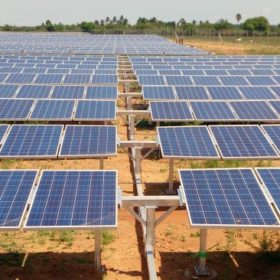
Up to 150 GW of PV and wind projects could be postponed or canceled throughout the Asia-Pacific region by 2024 if the coronavirus-triggered recession continues beyond the current year, according to new research by Wood Mackenzie.
Covid-19 daily bulletin: Renewables squeezing out fossil fuels as energy demand plunges
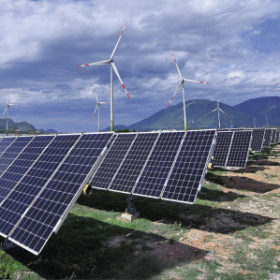
Although the energy price recovered this week, ultra low levels driven by bumper solar power generation on a sunny weekend in Germany reportedly put further pressure on the business case for conventional energy.
Pushing quantum dots forward
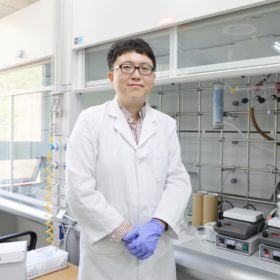
Scientists in Korea have investigated performance degradation in quantum dot solar cells – an important consideration for a technology that has seen rapid efficiency increases in recent months. The group found surface oxidation of quantum dot material represents a significant threat to longer-term performance and the researchers suggest that an additional layer in the cell could solve the problem.

Focus on the negatives: A new path to highly efficient tandem cells
Scientists in the U.S. and South Korea have identified what could be a new route to high-efficiency perovskite-silicon tandem solar cells. Through engineering negatively charged particles in the passivation layer, the group made a tandem cell with 26.7% efficiency. With further tweaks to the silicon layer they expect to be able to surpass 30%.
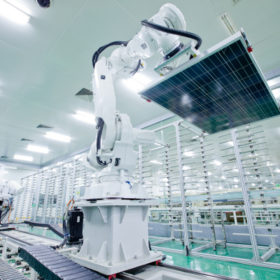
Jinko joins Covid-19 fight
The module giant today announced it will donate a million items of personal protective equipment to the European and Asian countries currently battling the spread of the novel coronavirus.

South Korea’s president makes zero-carbon economy election pledge
For the first time ever, President Moon Jae-in’s ruling Democratic Party has vowed to achieve a zero-carbon economy, just weeks ahead of the April 15 legislative election.
Hybrid tandem quantum dot solar cell with 12.8% efficiency
South Korean scientists have produced an organic, hybrid-series tandem PV device that combines quantum dots and organic bulk heterojunction photoactive materials. They claim that the cell has the highest efficiency among all reported colloidal quantum dot cells, including single-junction devices and tandem devices.
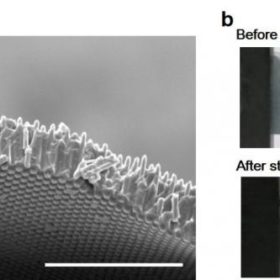
A stretchable, transparent solar cell with 8% efficiency
Korean scientists have unveiled a colorless device made of silicon microwire composites. The enhanced light absorption of the cell, the researchers claim, is due to the re-absorption of light by the microwires, which also benefit from an enhanced electric field.
Achieving 21.2% efficiency in a perovskite cell thanks to food additives
South Korean scientists have developed two perovskite solar cells based on a polymer made with peppermint oil and walnut aroma food additives, respectively. The new dopant‐free hole transport polymer is said to enable longer durability of the devices and to prevent lead-leakage.
