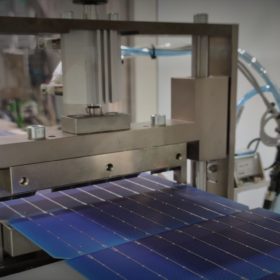
Mondragon Assembly secures licensing deal for continuous string process
Mondragon Assembly’s continuous string process technique is purportedly 10% more productive than a standard stringing machine.
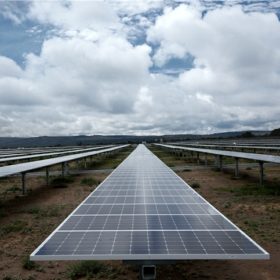
Iberdrola to hybridize four Spanish wind farms with solar PV
Iberdrola plans to build four hybrid PV-wind projects in Andalusia, southern Spain.

Canal in Spain may host 160 MW solar plant
The government of Spain’s Navarra region has approved a 160 MW solar project planned by the local renewable energy association Anpier. The plant is to be deployed on the Canal of Navarra, which is one of the country’s largest artificial irrigation canals.
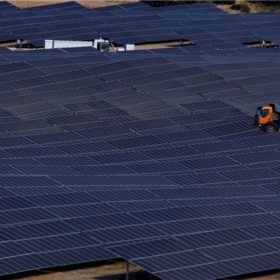
Iberdrola, Prosolia to build 1.14 GW solar project in Portugal
Prosolia has confirmed to pv magazine that the project will be built in Santiago do Cacém, about 200 kilometers south of Lisbon. The plant will employ Tesla batteries.

The Hydrogen Stream: Indian group makes bold green hydrogen claim as plans emerge for production capacity in Spain
The renewables-powered sustainable hydrogen announcements have come as a group of international researchers made controversial claims about the potential of gas-fired blue hydrogen to be part of the climate change solution.
Nueva tecnología de inversores e insights de O&M: optimización del servicio y reducción de costes
Lograr el mejor equilibrio entre coste y rendimiento es el punto clave a la hora de planificar y operar una planta de energía solar fotovoltaica. En este seminario web de pv magazine, Ingeteam presentará su nuevo inversor central, el Ingecon Sun 3Power C Series. Además de una alta densidad de potencia y un sistema de refrigeración líquida en circuito cerrado que hasta ahora solo estaba disponible en los convertidores de potencia de Ingeteam para otras aplicaciones, el inversor incorpora inteligencia artificial y otras características que prometen optimizar los servicios de O&M y reducir los costes a lo largo de toda la vida útil de un sistema fotovoltaico.
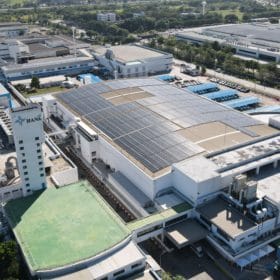
Solar on new-build homes has significantly shorter payback period
A report by BloombergNEF and Schneider Electric has pressed the case for governments to unlock the world’s potentially huge rooftop solar potential, and cited California’s solar mandate as a shining example.

Spanish consortium wants to simplify hydrogen production through photoelectrocatalysis
Spanish energy giants Repsol and Enagás are planning to build an electrolyzer based on photoelectrocatalysis at an industrial complex owned by the oil company in Puertollano in 2024. The device receives direct solar radiation and with a photoactive material it generates the electrical charges that cause the separation of the water molecule into hydrogen and oxygen.
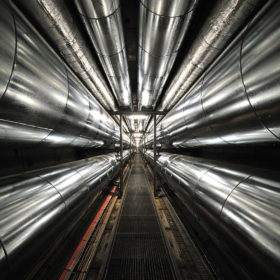
Heat pump control strategy for solar assisted district heating
Researchers in Spain have proposed two control strategies for the integration of heat pumps in district heating systems assisted by solar thermal collectors. Their technical-economic analysis shows that the proposed combination can reduce reliance on gas while also reducing costs.
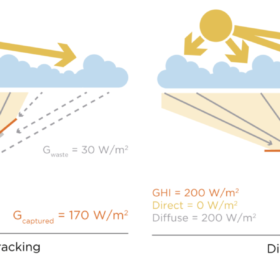
TÜV Rheinland confirms that Soltec’s algorithm increases PV plant yields by 5.3% on cloudy days
TÜV Rheinland has verified the performance of the Soltec Diffuse Booster algorithm, which uses both sensors and weather forecasts to drive its solar trackers. According to the manufacturer, it can increase the annual revenue of a 100 MW PV plant in Spain by €1.8 million.
