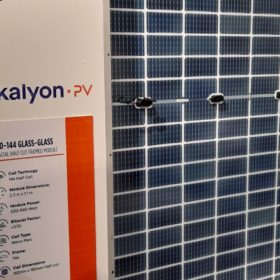
Turkey’s largest PV project secures $292 million guarantee from UK export credit agency
Kalyon Enerji aims to finish working on a 1.35 GW solar project in Turkey by the end of this year. The installation, which already features 227 MW of operational capacity, uses central inverters from General Electric.

System design for greenhouses relying on PV and ground source heat pump
Proposed by Turkish scientists, the system design consists of combining rooftop PV with a ground source heat pump in a greenhouse used for tomato, cucumber and lettuce cultivation. The solar array operates under net metering and grid electricity is used when PV generation is unable to cover demand. According to their findings, the system payback time ranges from 2.6 to 7 years.

Turkey deployed 992 MW of solar in first ten months of 2021
The country’s cumulative capacity reached 7.6 GW at the end of October.
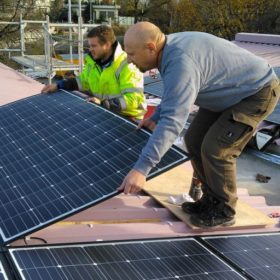
Solar job numbers kept on rising in 2020
The latest edition of a clean power jobs survey produced by IRENA and the International Labour Organization has stressed the important role which will need to be played by the public sector if the energy transition’s employment benefits are to be shared equally.

Turkey tenders another 1.5 GW of utility scale solar
The Turkish government has set a ceiling price of TRY0.40/kWh ($0.045) for the fifth procurement exercise of the Yeka program.
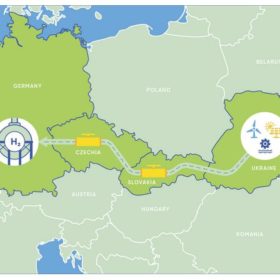
The Hydrogen Stream: Hydrogen highway through Central Europe
Elsewhere, the German government wants to allow the testing of hydrogen production from offshore electricity, while a French consortium intends to promote the use of hydrogen at airports and build a European airport network to accommodate future hydrogen aircraft. Furthermore, the Port of Rotterdam is increasing its efforts to become a hydrogen hub.
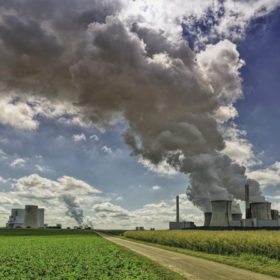
China holds the key to cancelling half the world’s new coal project plans
With pressure mounting on the world’s governments to turn their back on the fossil fuel, China and peers in South East Asia, Europe and South Asia could help deliver a coal-free future at the COP26 climate summit planned in Glasgow in November.

‘Polysilicon shortage will continue through 2021’
The latest global PV industry outlook published by trade group SolarPower Europe, has indicated tight supply of the solar panel raw material is expected to persist this year but the trade body said it would be unlikely to drive further price rises.
Turkey launches another 1 GW PV tender
The Turkish government has set a ceiling price of TRY0.40/kWh ($0.046) for the fourth procurement exercise of the Yeka program.
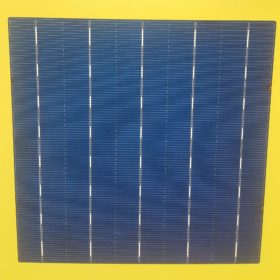
Researchers in Spain and Turkey project 22%-efficient UMG solar cell
The Cheer-Up project aims to enhance the performance of ‘upgraded metallurgical-grade (UMG) silicon for multi-crystalline solar cells and demonstrate it is a competitive alternative to polysilicon by achieving similar efficiencies at lower cost and with less environmental impact. Researchers also want to demonstrate UMG can be used to manufacture the most advanced cell structures.
