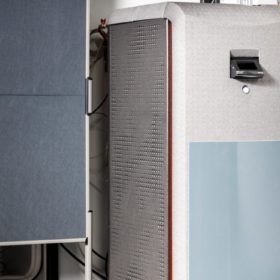
Vattenfall launches high-temperature heat pump solution to replace gas boilers
Developed in partnership with Dutch heating specialist Feenstra, the all-electric heat pump solution will initially be available in the Netherlands. The system’s buffer works as a heat battery that is used to provide heat to radiators and generate hot tap water.

Reliance Industries to acquire sodium-ion battery provider Faradion
Reliance Industries said its solar unit will buy UK-based sodium-ion battery technology provider Faradion for GBP100 million (US$135 million) including debt, as the Indian conglomerate pushes forward with its ambitious plan to move into the renewable energy industry.
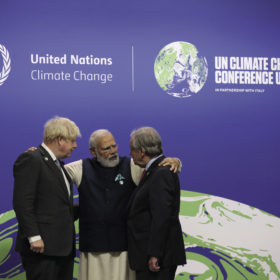
What COP26 means for solar
COP26 was either a great success or an abject failure, depending on who you talk to. What matters for the solar industry is the extent to which decisions agreed in the Glasgow Climate Pact are going to change the direction of the energy and financial sectors.

Damaging defects in silicon solar cells
Scientists in the UK investigated the relationship between two of the most worrisome defects that can affect solar cells in the field – cracking and hotspots. Their work analyzed solar cells with different levels of cracking under varying light conditions, finding that the most severely cracked cells were considerably more likely to run at high temperatures and form damaging hotspots.
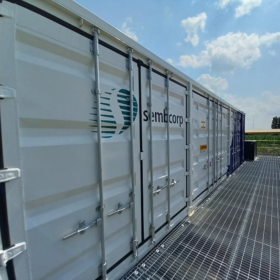
Sembcorp builds 360 MW battery in the UK
Once deployed, the battery will be Europe’s largest storage facility.
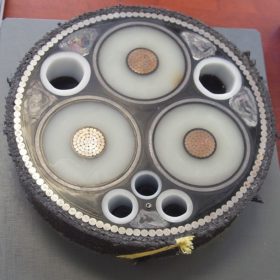
New subsea cables for the UK
Another round of the so-called “cap and floor” regime is expected to be held next year and will help the U.K. reach a total electricity interconnection capacity of 16 GW by 2030. The new interconnectors will likely be intended to harness large amounts of power from big offshore wind farm clusters in the North Sea.

UK launches new auction for large scale renewables, solar included for first time since 2015
The fourth round of the Contracts for Difference (CfD) scheme is expected to allocate 12 GW of renewable energy capacity. Solar and on-shore wind, which the British government considers well-established technologies, are entitled to secure up to 5 GW, but the limited budget these two technologies have been awarded may not be enough to reach this level.
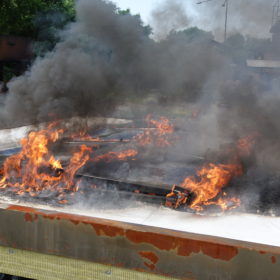
New tool to understand component failure rate in PV-related fires
Scientists have developed a new model based on fault tree analysis to evaluate the frequency of fires caused by rooftop PV systems and assess system safety and reliability. They claim that the new tool has the potential to identify fault linkages in systems, highlight failure patterns before they arise, and compare multiple designs for safety.

The Good, the Bad and the Ugly: defects in perovskite solar cells
Scientists in the UK delved deep into the structure of a perovskite solar cell, looking to understand the complex relationship between the materials that make up the perovskite layer, and the role of different defects in both limiting and improving performance. The findings could allow for new perovskite materials that are specially structured to maximize PV performance.
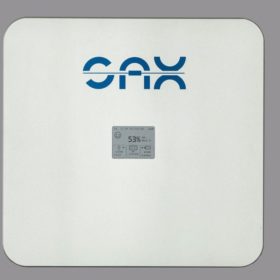
Germany will continue to dominate European home battery market – no matter who is in government
Industry association SolarPower Europe expects little change in the line-up of Europe’s biggest residential battery markets in four years’ time, with a rush of retrofits as turn-of-the-century solar feed-in tariffs begin to expire, set to keep Germany way ahead of the pack.
