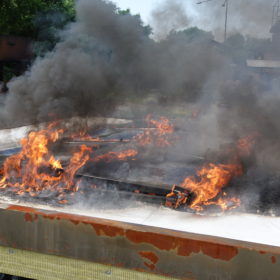
New tool to understand component failure rate in PV-related fires
Scientists have developed a new model based on fault tree analysis to evaluate the frequency of fires caused by rooftop PV systems and assess system safety and reliability. They claim that the new tool has the potential to identify fault linkages in systems, highlight failure patterns before they arise, and compare multiple designs for safety.

The Good, the Bad and the Ugly: defects in perovskite solar cells
Scientists in the UK delved deep into the structure of a perovskite solar cell, looking to understand the complex relationship between the materials that make up the perovskite layer, and the role of different defects in both limiting and improving performance. The findings could allow for new perovskite materials that are specially structured to maximize PV performance.

Germany will continue to dominate European home battery market – no matter who is in government
Industry association SolarPower Europe expects little change in the line-up of Europe’s biggest residential battery markets in four years’ time, with a rush of retrofits as turn-of-the-century solar feed-in tariffs begin to expire, set to keep Germany way ahead of the pack.

London developer secures backing for 500 MW of solar in the UK
Queequeg Renewables says it has formed a joint venture with an Italian private equity investor to fund the first slice of a planned 1.3 GW solar-plus-storage portfolio in Britain.
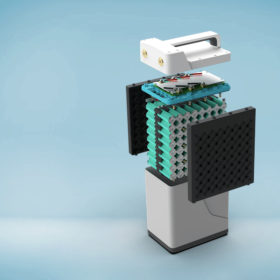
UK business claims to offer ‘world’s most sustainable lithium-ion battery’
English manufacturer Aceleron claims every component of its devices can be accessed for replacement, repair or recycling, with the business’ co-founder stating the aim is to ensure ‘100% of the materials in our batteries will continue to be used for as long as possible – preferably forever.’

Ireland cites need for 1.9 GW more solar this decade to stay on track for net zero
Although wind power dominates the renewables scene in the Republic of Ireland and the North – and even natural gas has a bigger role to play – the grid companies of the neighbors have revised up their estimates of how much solar will be needed, after talking to the public and industry.
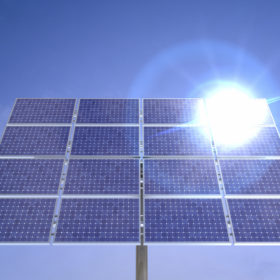
A hybrid wind-solar-biogas sytem design including battery and thermal storage from PV modules’ excess heat
Tested in an off-grid location in India, the proposed approach includes the use of thermal storage from PV modules’ excess heat for space and water heating. The optimum configuration for the system was given by the combination of a 224 kW PV system equipped with a phase change material, a 206 kW wind turbine, a 420 kW biogas generator, a 633 Ah battery, and a 170 kW converter.

New renewables developer wants 2.7 GW of European projects on the books next year
Aukera Energy, launched as a brand today but staffed by clean energy professionals who have worked with backer AtlasInvest for at least a decade, says it already has more than 1 GW of solar and wind capacity under development in Italy, Poland and the U.K. and wants to almost treble the scale of that portfolio within 12 months.
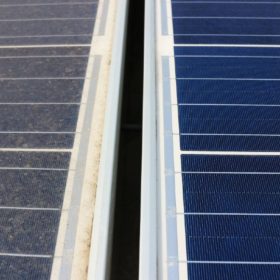
Hydrophobic anti-soiling coating for solar modules
A U.K. research group is developing an anti-soiling solution produced via a chemical process compatible with glass manufacturing. The Engineering and Physical Sciences Research Council is providing $1.6 million of funding for the project.

Canadian Solar signs deal for 1.5 GW/3 GWh of UK batteries
English clean energy company Windel Energy will develop the projects until they are ready-to-build, with Canadian Solar expected to supply the batteries.
