
Improving roll-to-roll slot-die coating via machine learning
University of Sheffield researchers developed a machine learning framework to improve coating properties in a roll-to-roll slot die coating process. The work is seen as an initial step toward broader use of machine learning and related technologies to assist with optimization.

Indoor perovskite solar cell built with triple passivation strategy achieves 37.6% efficiency
An international research team has constructed an indoor perovksite PV device by using a triple passivation treatment to reduce crystal defects in the perovskite film. The cell achieved remarkable efficiency and was also able to retain 92% of its initial performance after 3,200 h.
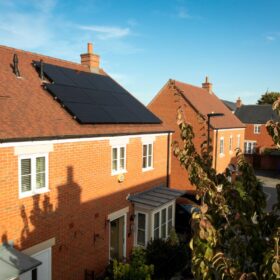
Sunsave raises GBP 113M, targets full EMS offer for UK consumers
Equity and debt facility provides Sunsave resources to increase deployment and develop home energy management system (EMS) according to co-founder Ben Graves. The start up offers solar on a subscription basis with customers owning the installation on their property from the offset.
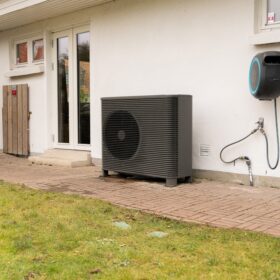
Swedish heat pump maker Aira raises €150 million, plans production capacity expansion
Aira is raising €150 million in equity financing to support increased production capacity in Wroclaw, Poland, as well as further research and development in Sweden.

The Hydrogen Stream: EIA sees mostly gray hydrogen in US by 2050
The US Energy Information Administration (EIA) says US hydrogen production will increase about 80% by 2050, mainly from natural gas with minimal electrolyzer use, while key industry players advance large-scale green hydrogen projects and expand hydrogen vehicle support across global markets.
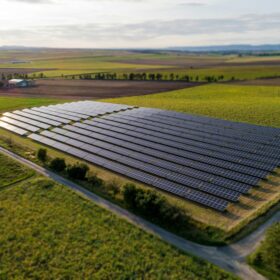
UK opens seventh CfD renewables auction
Extended contracts and more flexible commissioning dates on offer for solar developers. The target commissioning window for solar projects has also been extended, giving developers more flexibility on contract start dates.
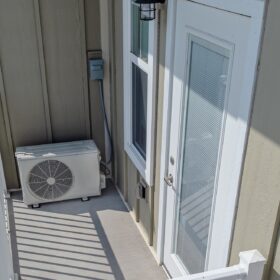
Record UK heat pump installations for H1 driven by grant support
Heat pump deployment accelerates in the United Kingdom as grant scheme provides record support in first half of 2025. UK government has targeted 600,000 heat pump installations per year by 2028.

UK installs 621 MW of PV in H1
Provisional data finds United Kingdom on course to add more than 1 GW in 2025 with revisions likely to show greater capacity as more plants are recorded. However, the pace of deployment must accelerate to hit 45-47 GW target by 2030.
Smart Pension invests GBP 330 million in Octopus Energy clean-tech funds
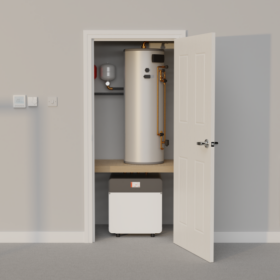
UK workplace pension provider Smart Pension has announced an initial GBP 330 million ($440 million) strategic investment in Octopus Energy Generation. The renewables arm of Octopus Energy invests in solar, wind and energy storage projects, as well as clean energy technologies such as heat pumps.

Big Solar Co-op raises over GBP 1 million for UK coal mine project
Solar bond offered through impact investing platform provides community energy cooperative with funds to construct 3.5 MW project in Whiteborough, England. Big Solar Co-op plans to use European manufactured and second-life panels. The co-op expects to commission the project before the end of 2025.
