
The Hydrogen Stream: GM, Autocar aim for hydrogen vehicle production by 2026
GM and Autocar Industries have agreed to jointly develop hydrogen-powered heavy-duty vehicles using GM’s Hydrotec power cubes, while European lawmakers have reached a provisional agreement on common market rules for renewable gases and hydrogen.
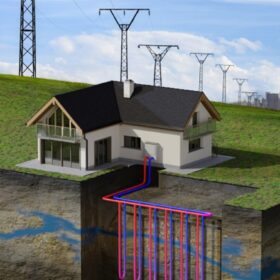
Geothermal heat pumps to decarbonize buildings
The mass adoption of geothermal heat pumps could decarbonize buildings and reduce grid transmission needs, according to a report by Oak Ridge National Laboratory and the US National Renewable Energy Laboratory (NREL).

Gates-backed Fourth Power pilots thermal storage based on TPV cells
Fourth Power, backed by Bill Gates’ venture firm, has developed high-density thermal energy storage (TES) based on thermophotovoltaic (TPV) cells. The tech, which is reportedly 10 times cheaper than lithium-ion batteries, is based on the US company’s patented liquid metal heat transfer system.

Competition heats up
Oversupply is hitting some solar manufacturers hard but grid constraints and labor shortages are unlikely to hold the solar industry back in 2024.
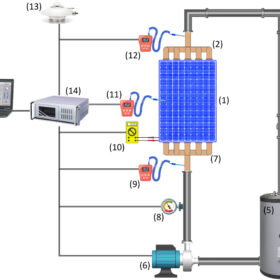
Using waste heat from PV panels to generate residential hot water
Scientists in the United States has developed a new photovoltaic-thermal system design that utilizes parallel water pipes as a cooling system to reduce the operating temperature of photovoltaic panels. The waste heat generated by this process is then used to generate domestic hot water.

US solar industry back on roller coaster through 2026
The Solar Energy Industries Association (SEIA) and Wood Mackenzie predict that 33 GW of solar will likely be added in the United States in 2023. Despite economic challenges in the near future, solar is expected to be the largest source of generating capacity by 2050.

MIT researchers plan to use acenes to make singlet fission solar cells
Acenes are benzene molecules with unique optoelectronic properties. Singlet fission solar cells can produce two electrons from one photon, making the cell more efficient.
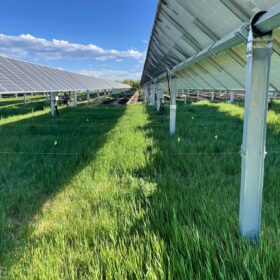
Agrivoltaics may increase forage quality in semi-arid regions
New research from the United States showed agrivoltaic plants on grassland may not only maintain grass productivity but also increase forage quality. The scientists took their measurements at the Jack’s Solar Garden (JSG), an elevated, south-oriented agrivoltaic research facility using single-axis-tracking systems near Longmont, Colorado.
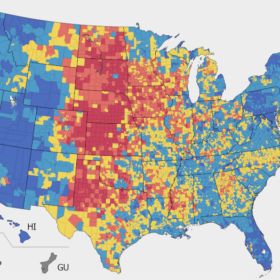
Hail damage accounts for about half of all solar facility loss claims, says GCube
GCube Insurance says that hail damage accounts for less than 2% of filed claims but constitutes more than 50% of total costs for solar facility loss claims.
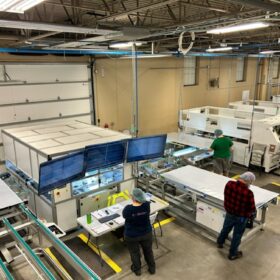
Heliene expanding PV production in US market
Heliene has invested about $10 million to expand its manufacturing and assembly line in the US state of Minnesota.
