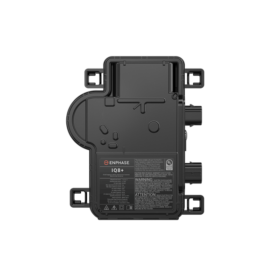
Microgrid-forming PV microinverter from Enphase
The 97%-efficient device is said to be the most powerful PV microinverter developed by the company to date and is capable of forming a microgrid during a power outage. The U.S. manufacturer expects to ship the first products in December.
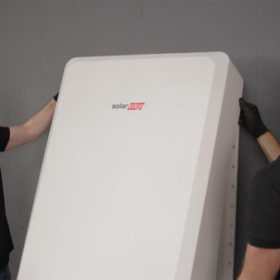
SolarEdge launches residential battery and inverter
The DC-coupled battery has 94.5% round-trip efficiency and the inverter offers up to 11.4 kW power and 10.3 kW backup power.

Highway-side solar could produce 36 TWh annually
A collaboration between universities, nonprofits, and a geospatial mapper led to development of a highway solar evaluation tool.

How varied energy storage can enable a low-cost renewable energy future
Research from the U.S. National Renewable Energy Laboratory shows that high-renewables operation is possible, and less expensive, when a range of energy storage technologies are used.

DNV puts different module formats to the test
Energy consultancy DNV was tasked by module manufacturing giant Longi Solar with comparing the balance of systems costs between modules utilizing 182mm and 210mm wafers, based on a 3.7 MW project in three different layouts. The results reveal a slim cost advantage for the smaller of the two, based on both fixed tilt and tracker systems.
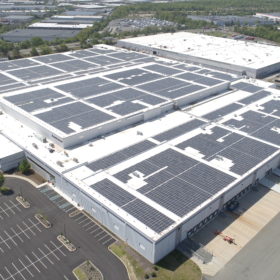
Re-Source 2021: Q&A with Iron Mountain’s Chris Pennington
US data management company Iron Mountain has a growing portfolio of onsite and PPA renewables, and it’s one of the first major corporate firms to track its renewables by the hour as part of an innovative PPA that may serve as a forerunner for widespread 24/7 matching.

Calculating the value of a US community solar program
U.S. researchers have teamed up to analyze the economic benefit of annually adding 30 5 MW of community solar installations to Michigan’s grid for six years. Their results may surprise.
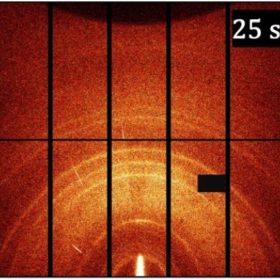
Laser focus on perovskite film formation
Scientists in the United States developed a method to observe the structure and mechanics of a perovskite material during its synthesis and transition from liquid precursors to a solid thin film. The group says its work will provide new insight into manufacturing and the development of reliable large-scale processes for perovskite solar cell production.

New York to sell PV equipment it bought for Tesla, Panasonic
The state of New York will sell more than $200 million in equipment as Tesla plans to ramp up and expand operations at a manufacturing facility in Buffalo.

Co-located hubs key to battery industry competitiveness
A report from Australia’s Future Battery Industries Cooperative Research Centre which analysed the development of battery hubs in the U.S., Germany and Japan, has found that co-location and cooperation between industry and government were key to their success. For Australia to play the same game, it will have to leverage its wealth of resources, and clean up its act along the way.
