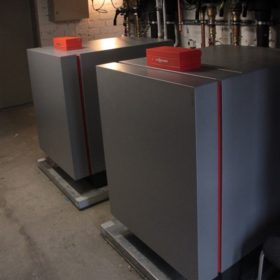
Fraunhofer ISE, Viessmann develop multi-source residential heat pump
Fraunhofer ISE has presented the results of retrofit heat pump installations in multi-family homes in Germany. One demonstrator featured rooftop solar PV and a multi-source heat pump developed in partnership with Viessmann. It uses air and geothermal as heat sources.
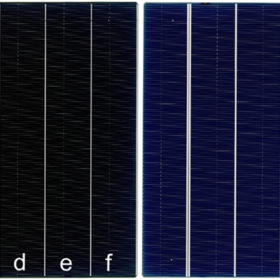
TOPCon shingle solar cell achieves 22.0% efficiency via thermal laser separation
Scientists from Germany’s Fraunhofer ISE and US panel maker Solaria have applied thermal laser separation and post-metallization passivated edge technology to tunnel oxide passivated contact (TOPCon) cell production. They have developed shingle PV devices that are more efficient than cells built with conventional laser scribing and mechanical cleaving methods.
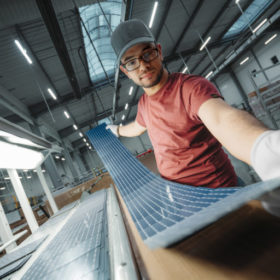
French module maker increases capacity
France’s Systovi is ramping up the annual capacity of its module factory in Carquefou, France. pv magazine France spoke to the company’s general director, Paul Toulouse, about European manufacturing and competition from Asia.

The Hydrogen Stream: Japan finances Australia’s plan to produce H2 from coal
A Japanese state innovation fund has agreed to finance a coal-to-hydrogen project in Australia, while Honda says it has taken another step toward the commercialization of zero-emission backup power generation.

Only5mins! – Above and beyond
United Kingdom-based Above’s founder and CEO Will Hitchcock sits down with pv magazine to discuss the solar industry’s growing demand for drone-based aerial inspection and data analysis, the game changing utility of digital twins, and what the future holds for autonomous drone programs.
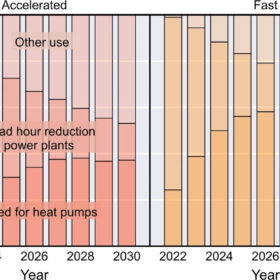
Heat pumps vs. renewables – a dilemma for Germany’s way out of gas
Researchers have looked at whether Germany can substitute more gas with renewables-powered heat pumps or renewable electricity to reduce load hours at gas-fired power plants. They argue that heat pumps are the fastest way to cut German gas consumption.
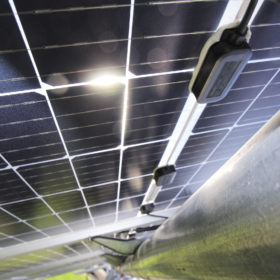
Dutch researchers propose modified IEC 61853 standard for bifacial solar
Scientists in the Netherlands have proposed the extension of the IEC 61853 standard to bifacial solar modules, with some key corrections. In particular, they recommend changing the third and fourth parts of the standard.
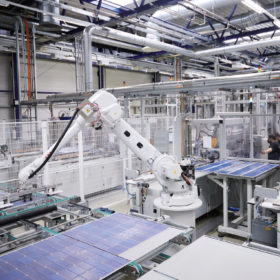
Meyer Burger shifting to 100% glass-glass bifacial panels
Meyer Burger says it will shift all of its manufacturing operations away from plastic.

Renewables-powered steam heat pump for industrial applications
MAN Energy Solutions is building an industrial-scale heat pump that generates steam without using gas. It will produce steam to dry dairy ingredients at a milk farm in New Zealand.
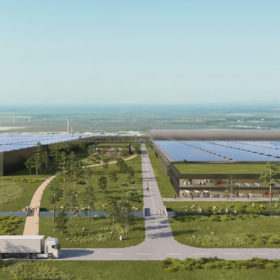
French manufacturer chooses 5 GW solar factory site
France’s Carbon says it has decided to build a €1.5 billion ($1.6 billion) solar production facility in Fos-sur-Mer, France.
