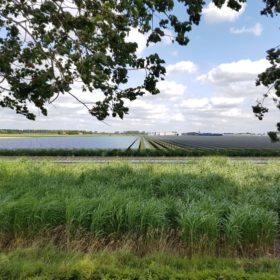
Vattenfall to build solar array along Dutch highway
Sweden’s Vattenfall has revealed plans to build a subsidy-free, large-scale solar plant along the A6 highway in the Netherlands. Construction is expected to begin in 2024, with operations to start in late 2024 or early 2025.
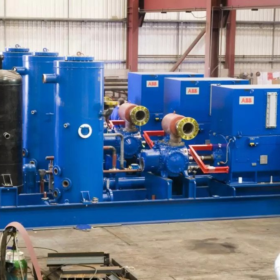
High-temperature heat pumps for industry
A new EU-funded project aims to show how heat pump technologies could supply various industrial processes with heat in the 90 C to 160 C temperature range. It also looks at how heat can be extracted from renewable sources like solar thermal, as well as ambient heat and industrial waste heat.
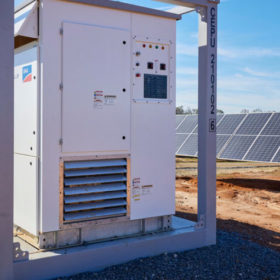
RWE to build 220 MW battery storage facility in Germany
RWE plans to build a storage facility to provide grid-balancing services for its power plants in Germany. The batteries will be installed at two RWE power plants in the state of North Rhine-Westphalia.
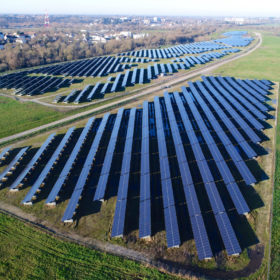
Tech advances halving surface needed for ground-mount solar
French developer VSN Energies Nouvelles was able to almost double the capacity of one of its PV projects due to technological advances such as high-powered panels and new plant design concepts.
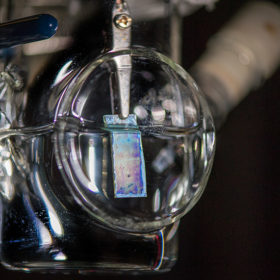
The Hydrogen Stream: Standardized measurements for solar water-splitting
NREL and Berkeley Lab have proposed efficiency and stability best practices for solar water-splitting to make hydrogen, while a team of researchers from Malaysia and Pakistan have revealed their findings on the feasibility of hydrogen-based incineration.

French railway operator signs 25-year solar PPA
SNCF has agreed to buy 207 GWh of annual electricity supplies under a 25-year power purchase agreement with France’s Reden, which is building four solar plants to provide electricity to the railway operator.
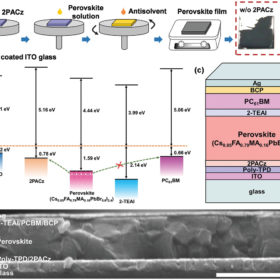
Inverted perovskite solar cell with 21.85% efficiency via surface modulator
A UK research group has used surface modulators to reduce non-radiative recombination in perovskite solar cells. They used 2-TEAI organic halide salt to build a cell with high power conversion efficiency and stability.
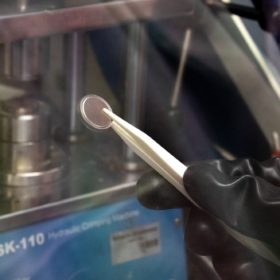
New polymer-based battery electrodes with high stability
UK researchers have developed organic electrode materials to integrate redox-active organic molecules into long-chain polymers. The new electrodes exhibit better cycling performance in lithium-ion batteries, with no apparent capacity decay over more than a thousand charge-discharge cycles.
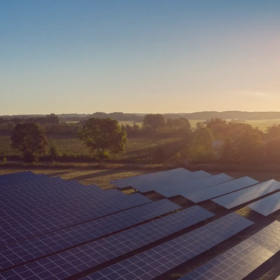
Equinor acquires Danish solar developer
Equinor is set to fully acquire developer BeGreen, which has a project pipeline of more than 6 GW in Denmark, Sweden and Poland.
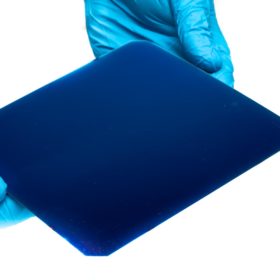
IBC solar modules may drive TOPCon out of market by 2028, says tech expert
Radovan Kopecek, an expert on interdigitated back-contacted (IBC) tech, says that IBC solar panels could capture more than 50% of the global market by 2030, potentially pushing TOPCon products out of competition. He told pv magazine how this transition might materialize and discussed the tech advancements that could make it possible.
