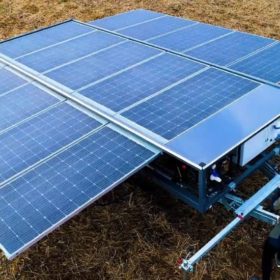
Solar trailer for off-grid applications from France
Developed by French start-up Ecosun, the trailer is equipped with 15 solar panels with output of 360 W and batteries with a storage capacity of 23 kWh. It can be used for construction sites, military camps and water pumping systems.
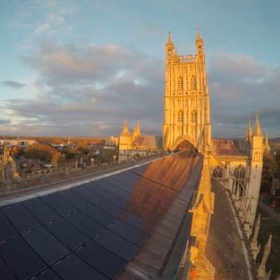
Solar for churches
Churches use energy mostly during the day, which makes them ideal buildings to deploy solar panels. Scientists in the United Kingdom have assessed the financial viability of a rooftop PV project for Bath Abbey and found that it could become profitable after 13 years.
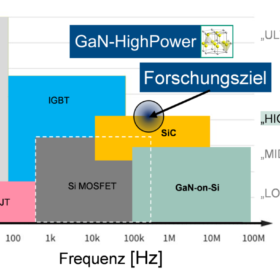
German consortium develops gallium nitride grid-supporting inverters
Researchers from German research institutes and companies are working on applying semiconductors based on gallium nitride (GaN) to string inverters with the aim of enabling cost and weight reduction while maintaining very high efficiency. These devices are expected to support grid operations through faster switching processes.
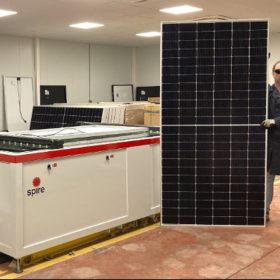
Solar simulator for high-power photovoltaic modules
Spire Solar Iberia has developed a state-of-the-art XL solar simulator that is able to measure the maximum power of photovoltaic modules of any size with high precision and to identify those with low performance.

‘The technology and the capital are available, but the market simply lacks execution capacity’
1Komma5° has acquired a majority stake in Swedish solar installation provider Cellsolar AB. This is the sixth acquisition of the recently founded Cleantech startup which wants to open the installation sector for the capital market in order to allow rapid growth.
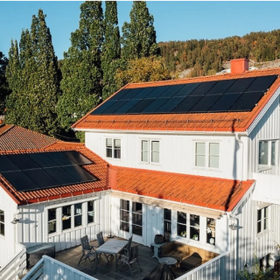
Norway increases support for residential PV
Norway’s clean energy agency Enova will increase the maximum PV system size eligible for rebates from 15 to 20 kW and the maximum subsidy amount from 1,250 to 2,000 NOK ($226.7) per kW installed. In addition, new subsidies of up to 10,000 NOK will be introduced for energy management systems that are often installed alongside solar arrays.
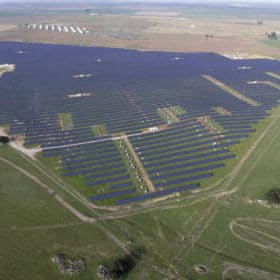
Portugal installed 701 MW of solar in 2021
The country’s cumulative PV capacity reached 1.77 GW at the end of December.
France publishes first-quarter FITs for PV systems up to 500 kW
The feed-in tariff granted will still be reduced each quarter, in line with how much solar capacity was installed in the previous three-month period, but to a lower extent.
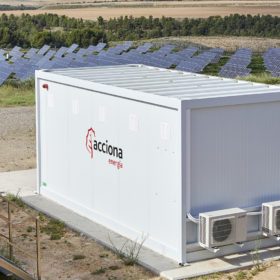
Zinc-bromide batteries to store solar power at Acciona’s testing field in Spain
Gelion’s Endure battery will undergo commercial tests at the 1.2 MW Montes del Cierzo testing field that the Spanish renewable energy company operates in Navarra.
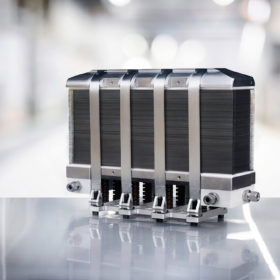
The Hydrogen Stream: Novel fuel cell tech based on liquid-organic hydrogen carrier
Germany’s Schaeffler is developing a hydrogen fuel cell that runs on a liquid organic hydrogen carrier, and Australia’s H2X Global has formed a joint venture with Indian automotive components manufacturer Advik Hi-Tech to manufacture hydrogen fuel cells, generators and vehicles.
