
Italy deployed 362 MW of PV in H1
At the end of June, Italy’s cumulative PV capacity surpassed 22.4 GW. Rooftop PV keeps driving the Italian solar market.
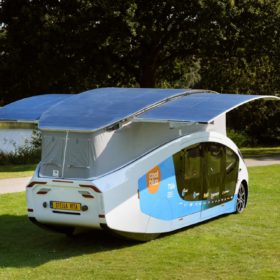
PV-powered mobile home with 730km range
Solar Team Eindhoven has developed an experimental mobile house that is powered exclusively by vehicle-integrated PV and is claimed to achieve a range of 730km, on a sunny day and at a, moderate speed of up to 85kph. The vehicle is equipped with a foldable PV system that can be unfolded and produce more power when the vehicle is not in motion.
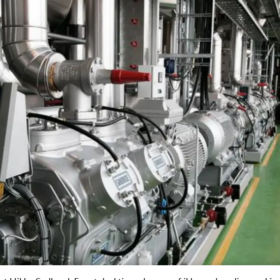
New incentive round for electric heat pumps in Denmark
The scheme is open to companies specializing in district heating and offers rebates covering up to 15% of the total investment made to buy and install the heat pump, with developers being eligible for a maximum of DKK5 million for each project.
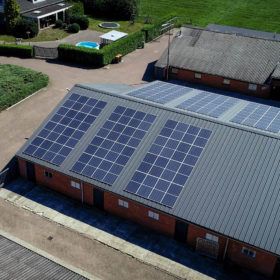
Dutch construction company invests in 300 MW solar module factory
The factory is under development in Eindhoven by Dutch start-up Solarge, and is scheduled to begin manufacturing activities in March.

Agrivoltaics to protect crops from heavy rainfall
BayWa r.e. and the Fraunhofer Institute for Solar Energy Systems ISE have built a 258 kW agrivoltaic system that hosts apple cultivation under four different crop protection systems. The system utilizes agrivoltaic technology with permanent, light-permeable PV modules that block rain, and tracking PV module tech that blocks rain only if necessary.

China holds the key to cancelling half the world’s new coal project plans
With pressure mounting on the world’s governments to turn their back on the fossil fuel, China and peers in South East Asia, Europe and South Asia could help deliver a coal-free future at the COP26 climate summit planned in Glasgow in November.

Stake in Greece’s distribution grid sells for €2.1bn
The state-owned electric utility has agreed to sell 49% of its shares in the grid. The sale is expected to boost the country’s transition to a greener and smarter energy system.
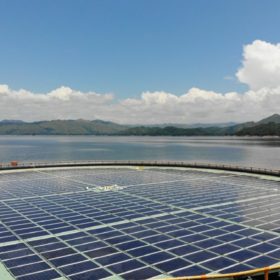
The world’s first large scale hybrid hydro-floating solar power plant
A Norwegian consortium led by Scatec is planning to build a hybrid hydropower-floating PV plant at an unspecified location in West Africa. Building both facilities simultaneously will help its developers define a series of parameters for proper sizing, optimization and design, and set a benchmark for future projects of this kind.
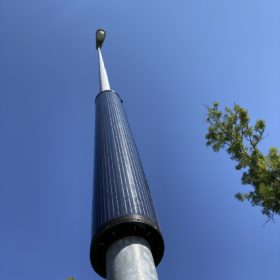
Cylindrical solar panel for street lighting
Developed by an Italian manufacturer, the panel is available in three versions with a power output of 100, 120, and 240 W and has a weight of 5 kg. It is encapsulated in thermoformable plastic technical polymers and can be connected in series with other modules around the same post.
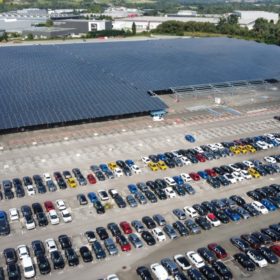
France’s largest PV carport is under construction
A 29 MW solar carport is being built by Engie at the factory of car manufacturer Stellantis in Sochaux. The plant is scheduled to begin commercial operation in October 2022.
