
Italy allocates 297.6 MW of PV in sixth renewables auction
The lowest bid came in at €0.0618/kWh and was offered for a 23 MW wind farm. The lowest bid for PV technology was €0.0685/kWh. All bids were slightly below the ceiling price of €0.07/kWh.
Solar-plus-hydrogen for air traffic control
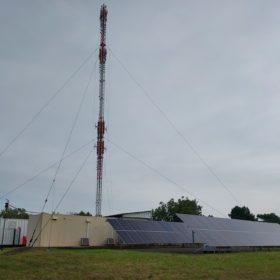
A 19.8 kW PV system is powering a telecommunications antenna at a French air control center. When it produces more energy than needed, the surplus is used to produce hydrogen which is then utilized to produce new electricity via a fuel cell system and provide power to the antenna during a period of up to five days. For short-term storage, lithium-ion batteries are used.
Iberdrola to hybridize four Spanish wind farms with solar PV
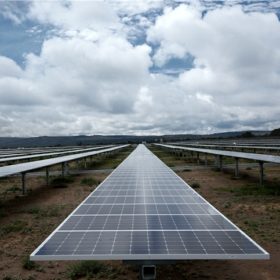
Iberdrola plans to build four hybrid PV-wind projects in Andalusia, southern Spain.
Residential lithium-ion battery from Belgium
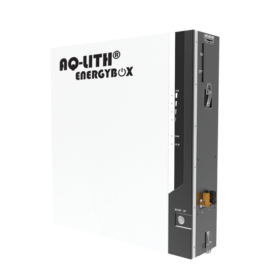
The battery is available in three versions, with storage capacities of 3 kWh, 5 kWh and 7 kWh with all devices featuring a nominal voltage of 51.2 V and a maximum charging voltage of 56.8 V.
The Hydrogen Stream: Hydrogen highway through Central Europe
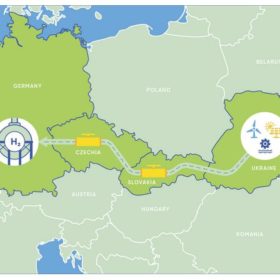
Elsewhere, the German government wants to allow the testing of hydrogen production from offshore electricity, while a French consortium intends to promote the use of hydrogen at airports and build a European airport network to accommodate future hydrogen aircraft. Furthermore, the Port of Rotterdam is increasing its efforts to become a hydrogen hub.

Interface engineering for a stable, 23.4% efficient perovskite solar cell
Scientists led by Switzerland’s École Polytechnique Fedérale de Lausanne (EPFL) demonstrated a simple approach to designing the interface between two layers in a perovskite solar cell, which was shown to improve both the performance and stability of the device. Solar cells fabricated by the group achieved 23.4% conversion efficiency, and were operated for close to 6,000 hours before degrading beyond 80% of this initial value.
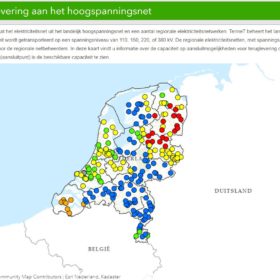
Dutch transmission system operator releases online map showing available grid capacity
The interactive map gives solar and wind project developers, as well as regional grid operators direct insight into where and how much capacity is available at Tennet’s high-voltage stations.
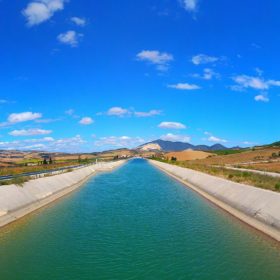
Canal in Spain may host 160 MW solar plant
The government of Spain’s Navarra region has approved a 160 MW solar project planned by the local renewable energy association Anpier. The plant is to be deployed on the Canal of Navarra, which is one of the country’s largest artificial irrigation canals.
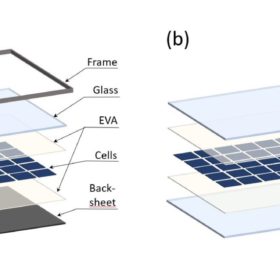
Frameless glass-glass solar modules made in Europe have the best CO2 footprint, Fraunhofer ISE says
The German research institute has compared the CO2 emissions of glass-glass and glass-backsheet solar modules manufactured in Germany, the EU and China, and found glass-glass modules enable an additional emissions reduction ranging between 7.5 to 12.5% compared to PV modules with backsheet film, regardless of the location.
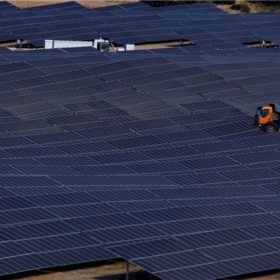
Iberdrola, Prosolia to build 1.14 GW solar project in Portugal
Prosolia has confirmed to pv magazine that the project will be built in Santiago do Cacém, about 200 kilometers south of Lisbon. The plant will employ Tesla batteries.
