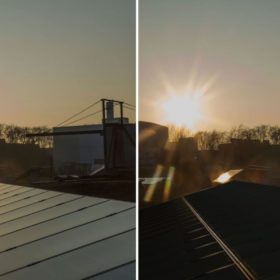
German start-up develops anti-reflective film claimed to improve PV module performance by 10%
German start-up Phytonics has developed the film by taking inspiration from nanostructures in plants. In solar cells, the film enables a broader absorption spectrum and a higher angle of light-incidence tolerance.
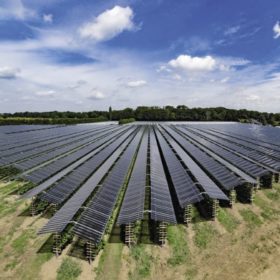
Baywa re seeks farmers for agrivoltaic project in France
The German renewable energy developer has already identified two potential partners, a beekeeper and a sheep breeder, to exploit 20 hectares.

Hanwha Q Cells files patent infringement suits against Astronergy in Germany
The legal action against Astronergy follows the patent lawsuit initiated by Hanwha Q-Cells in Germany, the USA and Australia, in March 2019, against Longi, Jinko Solar and REC.
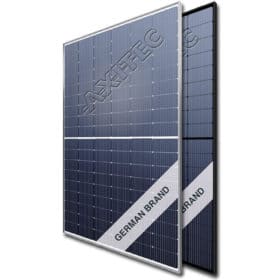
Axitec releases 540 W solar panels
German solar manufacturer Axitec has revealed plans to start selling its new half-cut PV modules from the second quarter. It manufactures the panels with 182 mm wafers.
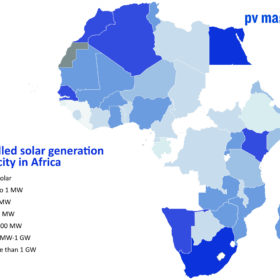
African green hydrogen could feed German and Japanese industry and water drought-stricken nations
Trade bodies the Africa Solar Industry Association and the African Hydrogen Partnership hosted a two-day virtual conference to discuss the role green hydrogen can play in economic growth across the continent–and how it could drive desalination in freshwater-starved coastal countries.

The weekend read: New pathways in flexible thin film PV
Having picked up GBP 5.8 million ($8 million) in a series of investments, U.K.-based Power Roll is pushing ahead with pilot production of an innovative new thin film with which it can manufacture both solar modules and capacitors. In the future, the design could also bring the potential for solar generation and energy storage within a single lightweight device.

SMA exceeds €1bn in sales for first time since 2012
German inverter manufacturer SMA has managed to shake off the impact of the pandemic by posting strong revenue and profits for 2020.
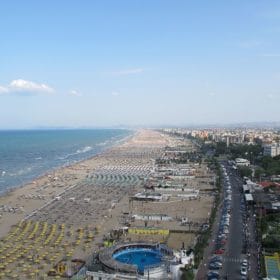
Adriatic Sea to host 100 MW offshore PV plant
Italy’s Saipem is planning what could be the world’s largest offshore PV plant — a 100 MW facility located off the coast of the Italian northern region of Emilia-Romagna. The project, whose approval process began two years ago, is expected to become operational by the end of 2025.
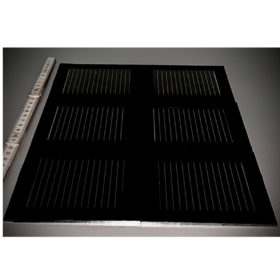
Perovskite solar module with 17% efficiency
A research team led by the University of Rome Tor Vergata in Italy has fabricated a perovskite solar module with a total active area of 42.8 cm2 and aperture area of 50 cm2. The panel was built with 20%-efficient perovskite cells connected in 14 series and was able to retain 90% of the initial efficiency after 800 h of thermal stress at 85° C.
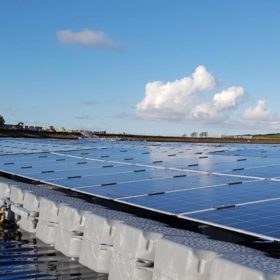
How much floating PV is enough?
Scientists in the UK have had a closer look at the impacts of floating PV systems on the water. They found that their cooling effect on water mitigates blooms of toxic blue-green algae and increased water evaporation, which are both caused by global warming. They also warned, however, that colder water may result in a reduction of the duration of so-called thermal stratification. The right proportion between the surface occupied by the PV array and a water surface’s total area is key for addressing this issue.
