
Adding solar to offshore wind
Scientists in the Netherlands conducted a feasibility study for adding floating solar to a planned 752 MW offshore wind installation in the North Sea. The study finds that the two could realistically share a single connection to an onshore grid, with minimal curtailment as well as technical and economic benefits for both technologies.

Italian sovereign wealth fund joins forces with Eni to deploy 1 GW of solar and wind
Cassa Depositi e Prestiti Equity and the Italian energy giant have created a joint venture that will invest around €800 million in renewables in their homeland by 2025. The two companies are planning to build large scale plants with the option of utilizing properties owned by the Italian government.
Solar mini-grid to protect Austrian highway from blackouts
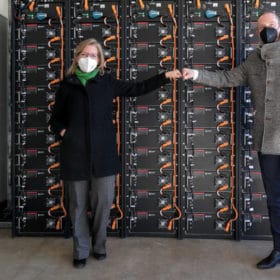
The Austrian motorway company Asfinag is planning to power, with solar-plus-storage, all its maintenance facilities. These installations are planned to power the stations at night and in the event of a grid failure.
Portuguese authorities review 1 GW solar project with Tesla batteries
A newly proposed solar project in Portugal could almost double the nation’s installed PV capacity. The installation will likely require an investment of around €1 billion.
Northvolt acquires lithium-metal battery start-up Cuberg
The technology developed by a business spun out of Stanford five years ago could deliver an electrolyte with energy density of more than 1 kWh/l.
Solon is back–and with it, the ambition of offering superior PV products
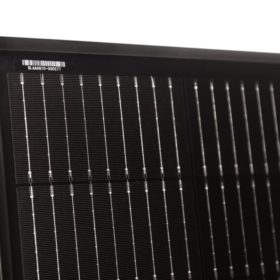
The German photovoltaic manufacturer was once a trademark for German quality. After two bankruptcies, it is again active in Europe, primarily in the commercial and industrial rooftop segment. It sticks to the same philosophy: to offer superior solar solutions.

UK start-up builds gravity-based storage system at Scottish port
Scottish start-up Gravitricity has begun construction of a 250 kW gravity-based energy storage project at Port of Leith. A 15m-high rig uses renewable energy to raise a mass in a 150-1,500m shaft and discharges the electricity thus ‘stored’ by releasing the mass to rotate an electric generator.
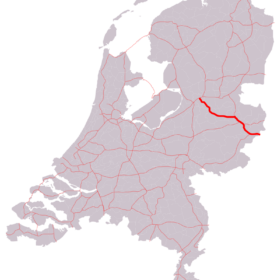
Dutch water agency to install more PV along highways
The Dutch water management agency plans to install solar along a highway in Overijssel. The project is part of a plan to build projects on state land, as the Dutch PV sector continues to search for alternative surfaces on which to deploy PV.

III-V multi-junction solar cell with 39% efficiency
Finnish scientists have developed a four-junction solar cell based on III-V semiconductor materials that is said to be able to achieve a wide spectral coverage. The cell was monolithically grown on gallium arsenide by molecular beam epitaxy (MBE).
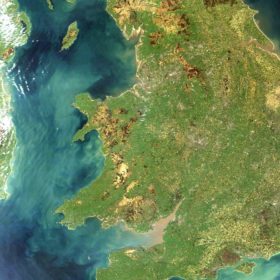
Solar could play big role in helping renewables displace UK’s planned gas fleet
Each 1.8 GW of new gas generation capacity could be replaced by 1.7 GW of solar as part of a cleaner, 6.3 GW collection of renewables and energy storage facilities–and that alternative already comes in cheaper than the business-as-usual approach, according to the Carbon Tracker thinktank.
