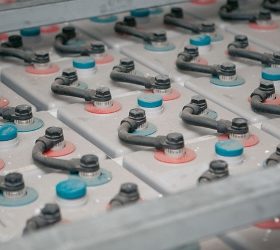
Three battery energy storage trends for the electrification of everything
As we closed out the first quarter of 2022, the energy storage industry continued to show stunning growth. When scrolling through the news, reading studies, and attending events, one can’t help but notice how critical battery energy storage is to a myriad of markets and industries. As innovative technologies emerge at a breakneck pace, they reveal three key trends in both market priorities and the sector’s current and future direction.
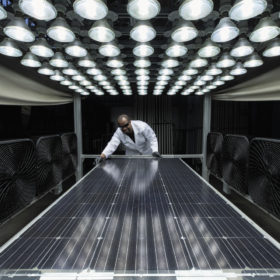
The weekend read: The financial risk of investing in PV systems and the ‘Peter PAN’ files
The financial risk of investing in photovoltaic systems is increasing. This is because the yield forecasts on which profitability audits are based are increasingly too optimistic. One reason for this could be the handling of so-called PAN files, reports pv magazine Deutschland’s Marian Willuhn.
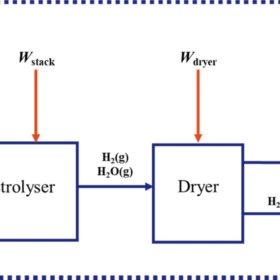
The Hydrogen Stream: High-pressure PEMEL electrolyzers for lower hydrogen costs
Elsewhere, Lotte Chemical and Air Liquid Korea will establish a joint venture to build a hydrogen supply chain in South Korea and the US Department’s Loan Programs Office (LPO) offered a conditional commitment for a US$504.4M loan guarantee to the Advanced Clean Energy Storage Project in Utah, which combines alkaline electrolysis with salt cavern storage for grid scale energy conversion and storage using hydrogen as the energy carrier.
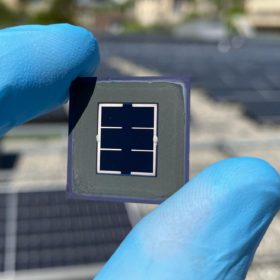
EPFL achieves 29.2% efficiency for tandem solar cell with fully textured silicon
Scientists in Switzerland made significant progress with an approach to perovskite-silicon tandem cell design that they say could eventually be integrated into existing silicon PV manufacturing. They have announced the achievement of a 29.2% cell efficiency – not far from the overall record for tandem cells, and verified by Germany’s Fraunhofer ISE.
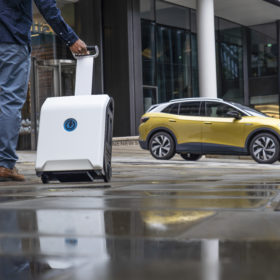
The mobility rEVolution: Portable EV charging stations for personal and shared use
In other news, BYD’s quarterly profit is up by 241% buoyed by demand for battery-powered cars, Ford takes a US$3.1 billion loss on its Rivian stake and cuts 580 jobs as part of corporate restructuring, and ABB agrees to provide its full portfolio of EV charging technology to Shell.
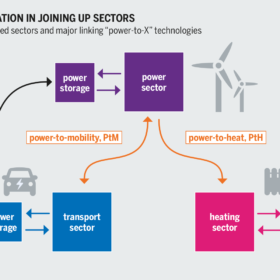
Techno-economic analysis of renewables-driven power-to-X processes
Researchers at the University of Genoa have conducted a techno-economic analysis to assess green hydrogen produced via water electrolysis and its conversion into three alternative fuels – methane, methanol, and ammonia. They looked into efficiency, storage capacity, annual costs, and production costs of the different fuels, which they found to be significantly higher than market reference values.
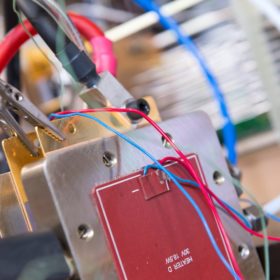
The Hydrogen Stream: Fuel cell that uses iron instead of expensive platinum
In other news, Hydrofuel Canada developed hollow hybrid plasmonic nanocages to create an electrocatalyst for ammonia synthesis from nitrogen (N2) and water (H2O) and said green hydrogen could be separated from this ammonia and sold at about $1.50 per kilogram. Furthermore, Norway’s Aker Horizons and Statkraft are exploring green hydrogen and ammonia production opportunities in India and Brazil, targeting local steel and fertilizer industries.
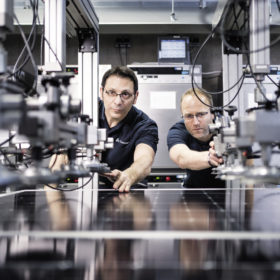
The weekend read: Key issues in PV module procurement for investors
The urgency to mitigate climate change and the need for more energy independence in many countries will boost demand for renewable energy to unprecedented levels. Meanwhile, trade conflicts, the logistics crisis, and insufficient supplies of raw materials have disrupted supply chains for the past two years. This has resulted in higher prices for solar equipment, challenging the predictability of on-time delivery and the quality of products. Sebastian Petretschek, TÜV Rheinland’s global head of PV power plants, examines the key issues in module procurement for investors.
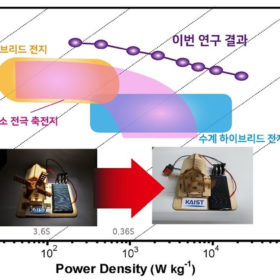
The mobility rEVolution: Hybrid lithium-ion battery capable of recharging within a minute
In other news, Volvo has invested in fast-charging battery tech firm StoreDot, Tesla has reported record profits in Q1, and Dutch start-up behind the world’s first commercial grid-independent solar car Lightyear has entered a carsharing partnership.
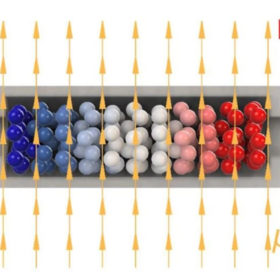
The Hydrogen Stream: Magnetic alloys for efficient hydrogen cooling
While a Japanese team developed a series of Er(Ho)Co2-based magnetic cooling alloys for hydrogen cooling, a US research team used a “simple” acid treatment to increase flow of hydrogen atoms within protonic ceramic electrochemical cells (PCECs). Hydrogen-fuelled mobility registered significant developments: the first hydrogen-electric passenger aircraft was piloted between two major airports in Germany, and a 75-passenger ferry service in the San Francisco Bay braces for operations in June.
